
Content repurposing is a powerful digital marketing strategy that helps transform existing content into multiple formats to boost reach, improve SEO, and save time. Instead of creating new content from scratch, you reuse and adapt ideas across blogs, social media, and videos. Tools like Framia Pro simplify content repurposing by using AI-driven workflows to automate rewriting, formatting, and multi-platform distribution for better marketing performance.
What is content repurposing (Meaning explained)
Content repurposing refers to the process of using old content and converting it into other forms or adapting it for use on various platforms. Rather than coming up with fresh content from scratch, one uses already produced concepts and reworks them to extend their reach and life span. This enables blogs, videos, e-mails, and even social media messages to function effectively on multiple channels at once, increasing efficiency and effectiveness.
Why content repurposing matters
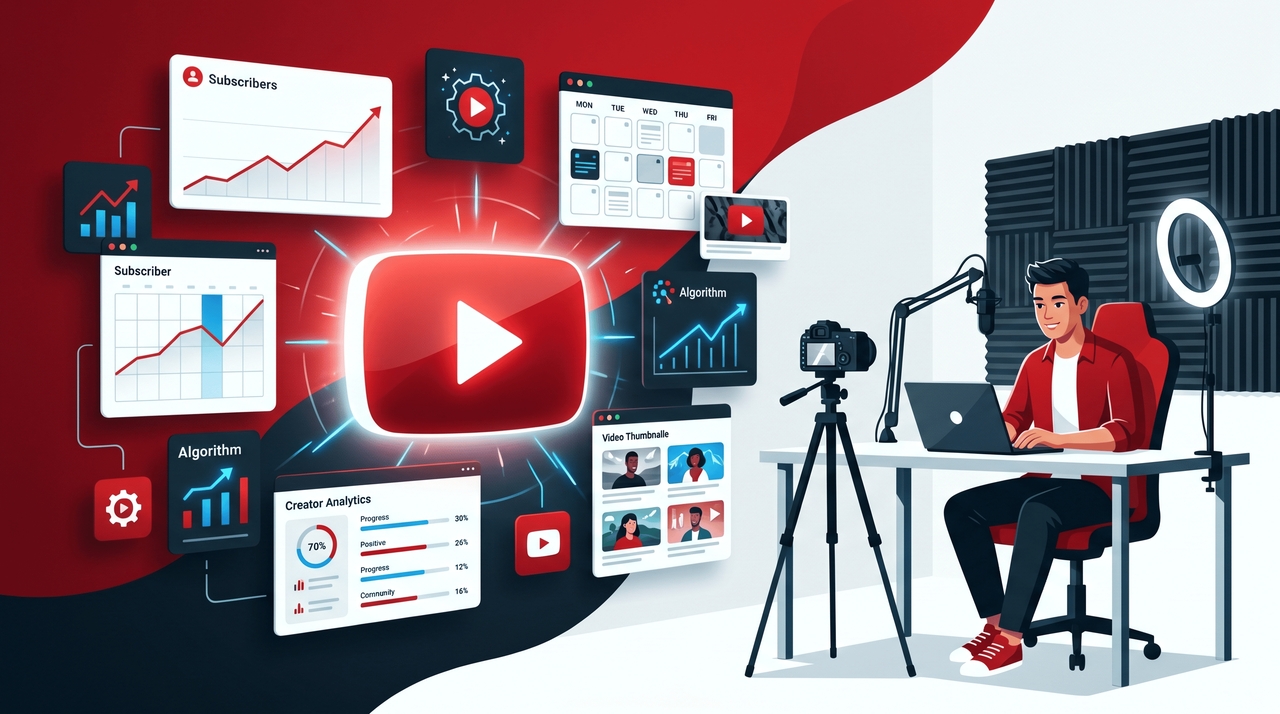
Content repurposing matters because it boosts reach, SEO, and saves time effectively.
- Expands audience reach: Content repurposing allows you to expand your audience exposure by creating various versions of a single piece of information through blogs, social media, videos, and even emails. This enables you to put your content in front of engaged users.
- Improves SEO performance: Repurposing content is an effective way of improving SEO performance through keyword distribution across blogs, videos, and posts. It enables the creation of several search entry points, improves the ranking process, and helps attract steady organic traffic to your site.
- Saves time and effort: Repurposing allows you to save more time since you do not have to create new content; you only have to use an existing content source. One blog may be transformed into posts, videos, emails, and many others, thus allowing you to work efficiently.
- Increases ROI and content value: Repurposing content allows you to maximize your investment and increase the value of your content. You turn one piece of content into various forms of content, such as blogs, videos, emails, and many others.
Content repurposing strategy: Step-by-step guide
Follow this simple step-by-step process to turn one piece of content into multiple formats effectively.
1. Identify high-performing content
Firstly, select content that is performing well, which could include blogs, videos, or any other content that receives significant traffic, engagement, and/or conversion rates. Evergreen content will work particularly well in this process because they provide a solid basis on which to build future content.
2. Break content into key ideas
Find the core concepts or insights contained within your content, such as tips, statistics, and important messages. These are the content blocks that you can use as individual pieces. With your key concepts isolated, it will be easier to repurpose every piece of content into smaller chunks suitable for other platforms.
3. Adapt to different platforms
Customize your content pieces to be appropriate for the platforms that you plan to publish them on. Your blog content should be tailored into LinkedIn posts, Instagram carousels, YouTube Shorts, or emails. Customize your content according to the user's thoughts for each platform to make sure that it is well-suited for each one.
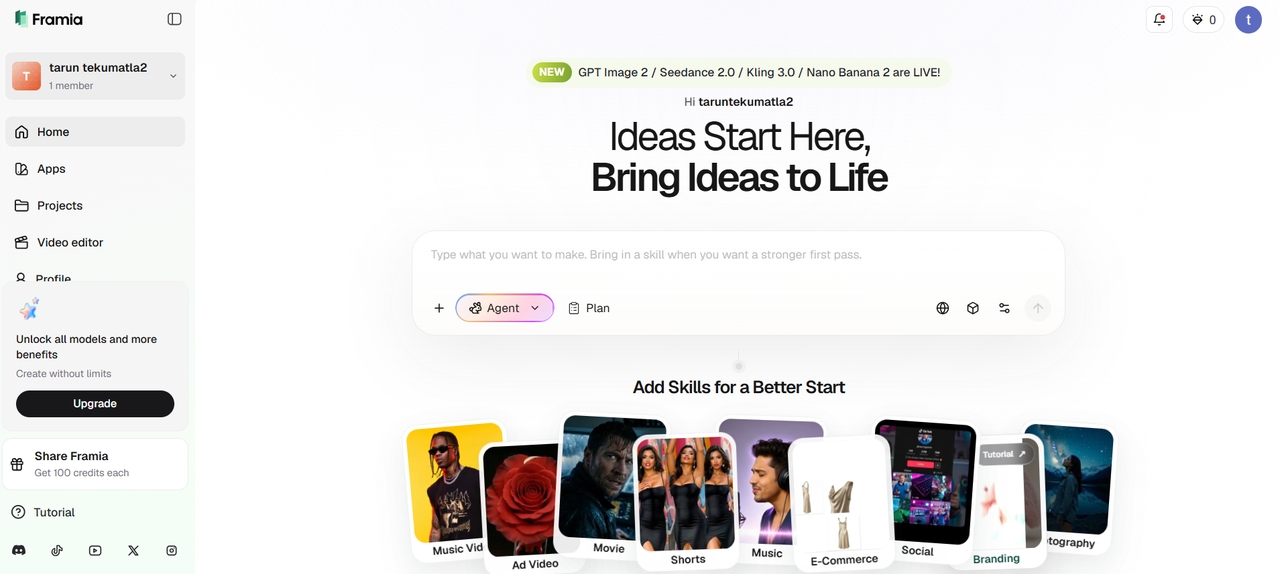
Using Framia Pro, adapting content across different platforms is easier than ever because it uses cutting-edge AI algorithms to automatically convert your content. Language models are applied to your content, optimizing it to fit each tone and format required per platform while retaining its core meaning and SEO relevance.
It also integrates video models like Sora 2 Pro, Veo 3.1, and Kling 3.0 to convert scripts or blog ideas into short-form videos like YouTube Shorts and Reels, along with image models of Midjourney v7, Flux Max, Seedream 5.0, and Nano Banana Pro that generate carousels, thumbnails, and social graphics from key points. Together, these capabilities allow Framia Pro to transform a single piece of content into multiple ready-to-publish formats efficiently and consistently.
4. Publish, distribute & optimize
Share your repurposed content across multiple channels and track performance metrics like engagement, reach, and clicks. Analyze what works best and refine your strategy over time. Continuous optimization ensures better visibility, stronger audience connection, and improved ROI from your overall content marketing efforts.
Real content repurposing examples for digital marketing
Learn how real content repurposing works with practical examples across marketing channels.
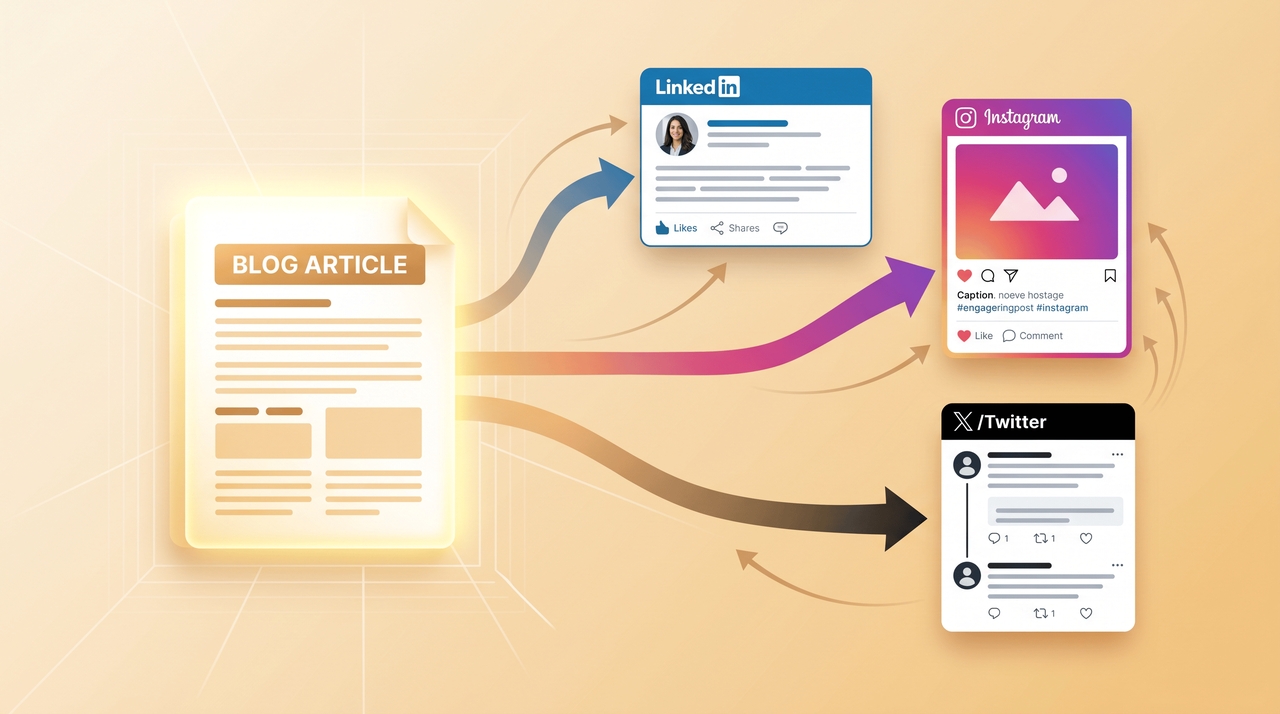
- Blog post → Social media posts
A blog post can be repurposed into LinkedIn posts, Instagram captions, and X threads by breaking down key insights into short, engaging updates. Each snippet highlights one idea and drives traffic back to the original blog for better reach and engagement.
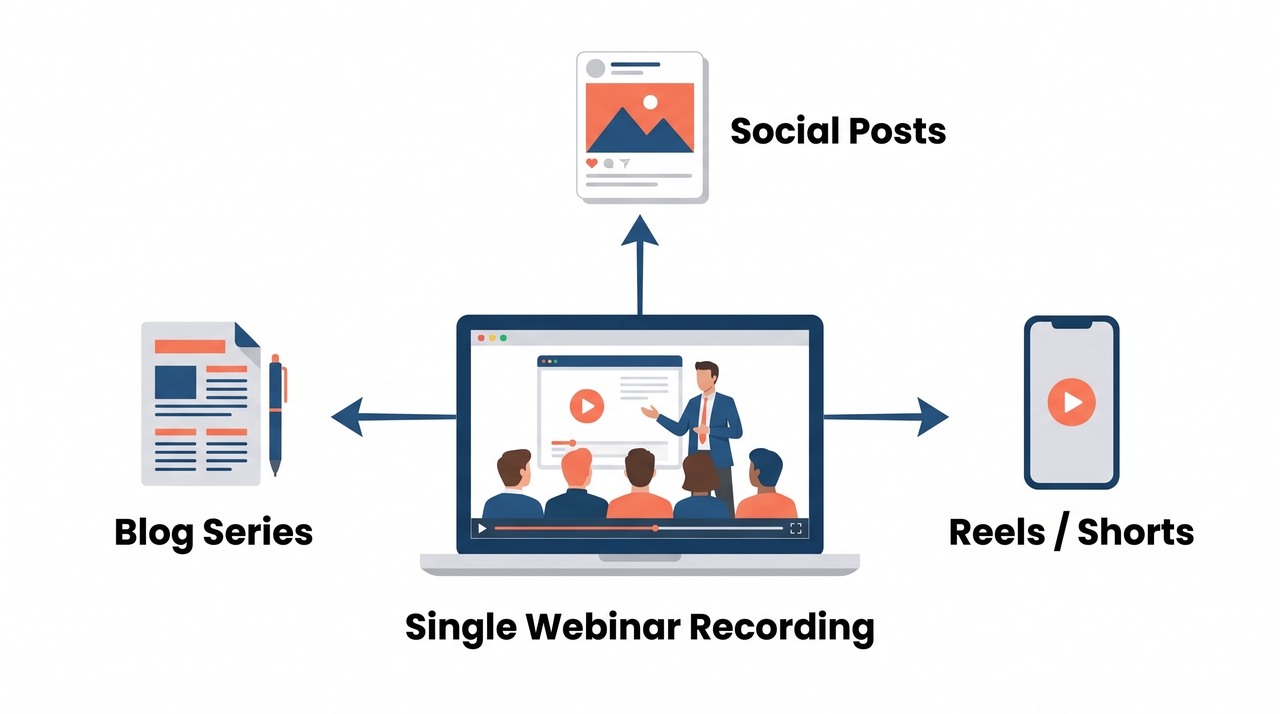
- Webinar → Blog series and short videos
A webinar can be repurposed to create a blog series and short video content. This involves breaking down critical points from a webinar into articles or Reels/Shorts to maximize the reach of the same recording on different platforms.
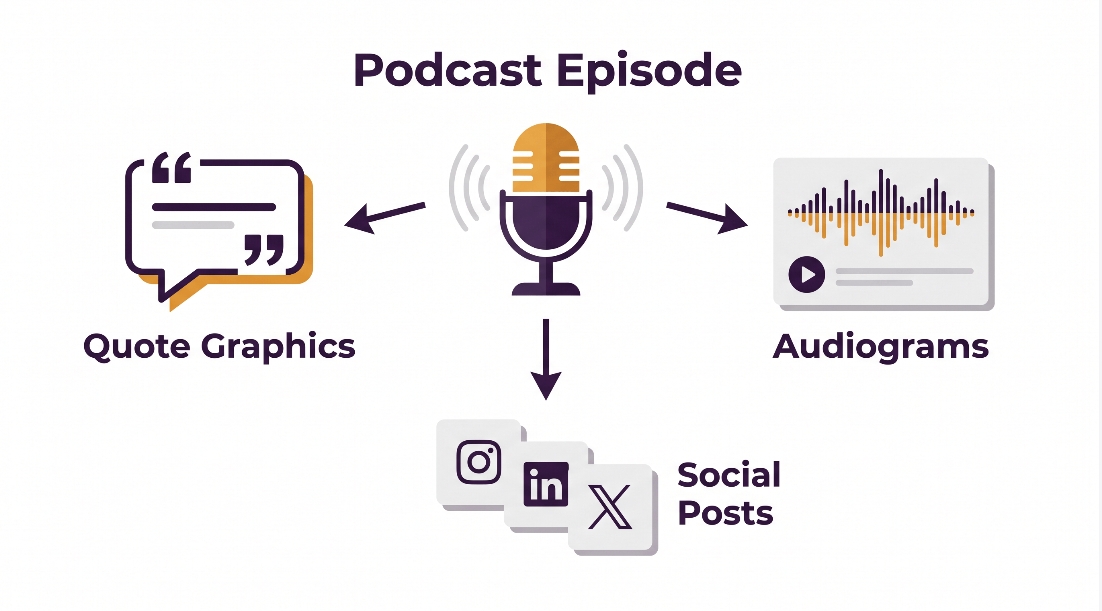
- Podcast → Quote graphics and social posts
A podcast episode can be repurposed to generate quote graphics, audiograms, and social media posts. This is done by selecting the best quotes and insights from a podcast episode, making content more shareable through Instagram, LinkedIn, and X.
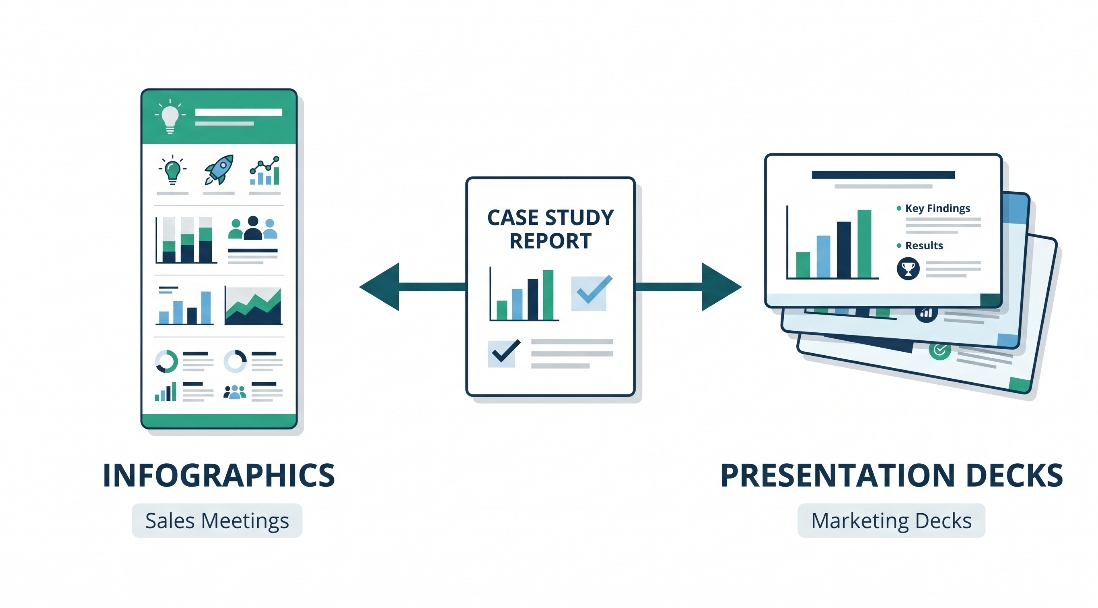
- Case study → Infographic and presentation deck
A case study can be repurposed to create infographics and presentation decks. This process involves visualizing the findings and results from a case study to facilitate easy comprehension and use in sales and marketing meetings.
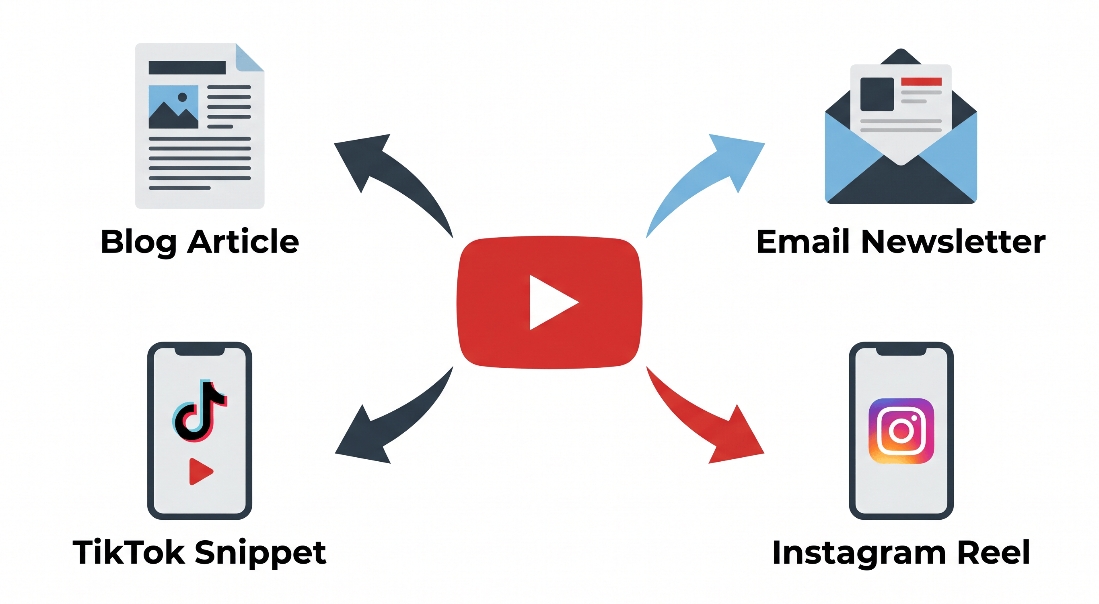
- YouTube video → Blog, email, and short clips
The YouTube video is capable of being reused as anything from a blog article to an email or a quick snippet by extracting the main points. This makes the content go farther by appearing in searches, emails, and even on social platforms such as TikTok and Instagram.
Content reuse vs content repurposing
Content reuse vs repurposing helps you understand the difference between repeating content and strategically transforming it for better SEO and reach.
- Content reuse: Posting the same content again on different platforms without major changes. It may help save time, but it offers limited SEO value and audience engagement since the message stays identical everywhere.
- Content repurposing: Transforming existing content into new formats like blogs, videos, infographics, or social posts. It adapts the message for each platform, improving reach, engagement, and SEO performance.
Repurposing is more strategic because it maximizes content value, strengthens keyword visibility, and helps reach different audience segments more effectively than simple reuse.
Conclusion
Content repurposing is a powerful strategy to reuse and transform content for better reach, SEO, and engagement across multiple platforms. It helps improve efficiency, visibility, and marketing results by turning one idea into many formats. To scale your content repurposing strategy effectively, Framia Pro is a great tool that automates content reuse and boosts performance with AI-driven workflows and smart optimization features.
FAQ's
- What is content repurposing in digital marketing strategy?
The use of content repurposing for digital marketing strategy refers to creating a completely new format from the already created content in order to achieve SEO optimization, increased reach, and maximum benefit.
- What tools help with content repurposing for SEO growth?
Software such as Framia Pro, Canva, and artificial intelligence tools that help with content repurposing make processes easier, contribute to SEO growth, and allow you to transform blog posts into videos, posts, and marketing content on other platforms.
- How to convert a blog into social media posts for repurposing?
Blogs can be transformed into posts on social networks through the transformation of content into insightful quotes, summaries of ideas, and content repurposing strategies to create social media content.
- What are the best content repurposing techniques in marketing?
Some of the best practices used for content repurposing include making small changes, changing formats, using AI-based tools, and repurposing content for multichannel promotion.
- How to repurpose content for email marketing campaigns?
Email marketing is one of the effective content repurposing practices; it requires you to summarize blog posts or videos into an engaging, clear email with a good call to action.