
Native content is transforming how brands connect with audiences in a crowded digital world. But what is native content exactly? It refers to brand-sponsored material designed to match the look, feel, and function of the platform where it appears—whether a news article, social media post, video, or infographic. Unlike intrusive banner ads, native content provides genuine value while subtly promoting a message.
This approach helps brands cut through ad fatigue and build trust by delivering content that feels organic and relevant. In this guide, we explain the definition of native content, explore examples of native content, and show how brands can use it effectively.
What does native content mean?
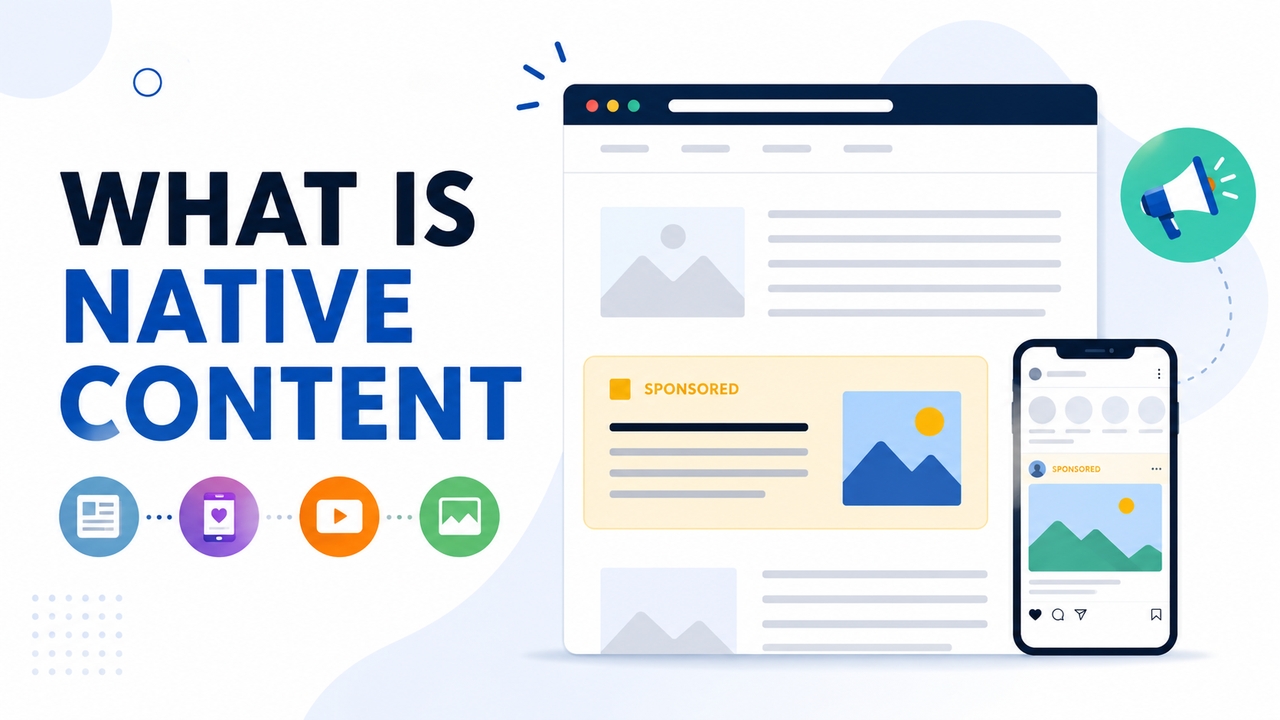
Native content (or native advertising content) is paid or commissioned material that blends seamlessly with a publisher's or platform's organic content. It looks and feels natural rather than like a traditional advertisement. Instead of looking like traditional advertisements, native content matches the style, tone, and format of surrounding content, making it feel less intrusive to audiences. This can include sponsored articles, social media posts, videos, or recommended content widgets. The goal of native content marketing is to provide useful, engaging, or entertaining information while subtly promoting a brand or product. Because it feels more authentic and relevant, native advertising often generates higher engagement and trust compared to standard display ads or promotional banners.
How do you spot native advertising?
Since native content is built to blend in, spotting it takes a little attention. The clearest way to identify it is to look for disclosure labels. Phrases like "sponsored," "paid content," "branded content," "ad partnership," "true native," "premium native," or "promoted" signal that what you're reading or watching is native advertising.
On social media, sponsored posts typically include a small "Sponsored" or "Paid partnership" tag beneath the account name. On news and publishing sites, the label is often placed at the top or bottom of the article in a slightly smaller font.
Beyond labels, you can also notice whether the content consistently mentions or links back to a particular brand, product, or service — even within what appears to be general information. That is a strong sign you're looking at native content rather than purely editorial material.
Benefits of native content marketing
Native content marketing has become one of the most effective strategies for brands in 2026. Here are the key benefits of native content marketing:
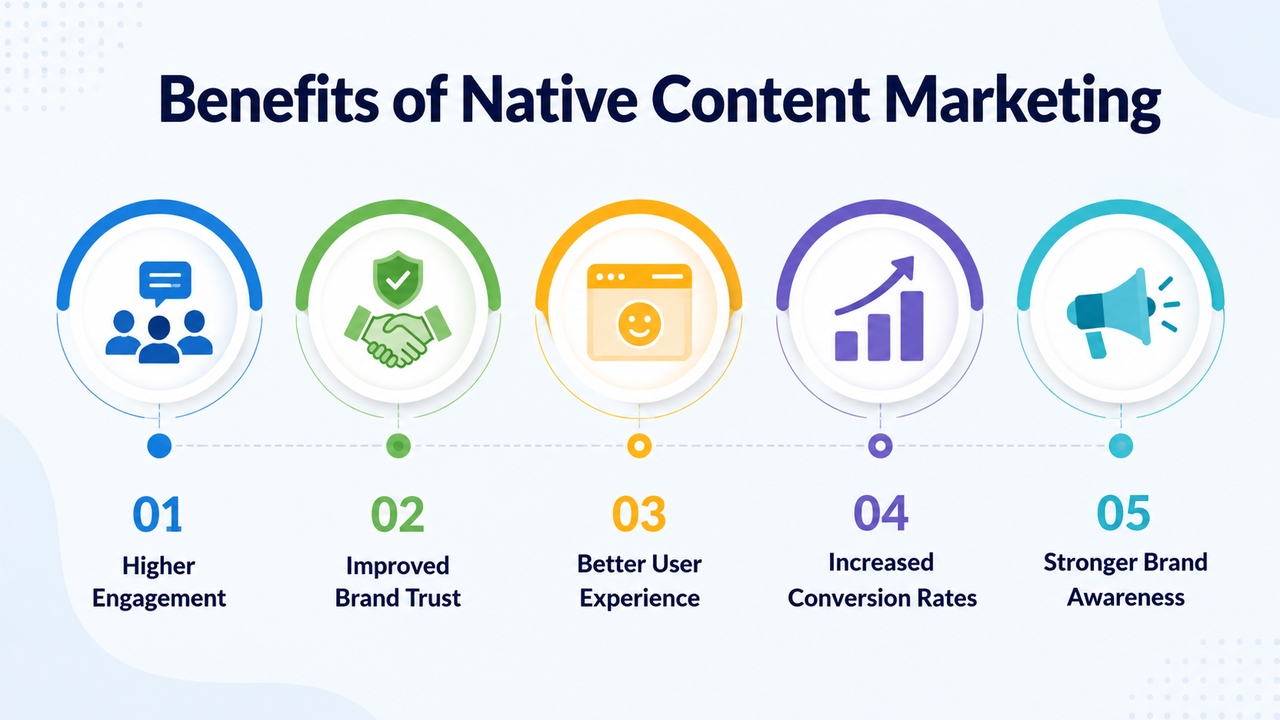
- Higher engagement rates: Native ads are viewed up to 4x longer and generate significantly higher click-through rates compared to traditional banner ads. Users treat them as valuable content rather than interruptions.
- Builds trust and credibility By blending seamlessly with platform content, native content feels more authentic. This subtle approach helps brands earn trust instead of triggering skepticism.
- Better user experience: Unlike disruptive pop-ups or flashing banners, native content respects the user’s journey, resulting in lower bounce rates and more positive brand perception.
- Improved brand recall and perception: Readers are more likely to remember and associate positively with brands that deliver useful, well-integrated content.
- Reduced ad fatigue & higher visibility: Since native ads fit the context of the platform (social feed, news article), users are 53% more likely to view them than banner ads.
- Ad-block resistance: Native formats are much harder for ad blockers to detect, ensuring your message reaches the audience effectively.
- Excellent targeting & analytics: Most platforms offer precise audience targeting and detailed performance insights, allowing you to refine campaigns for maximum ROI.
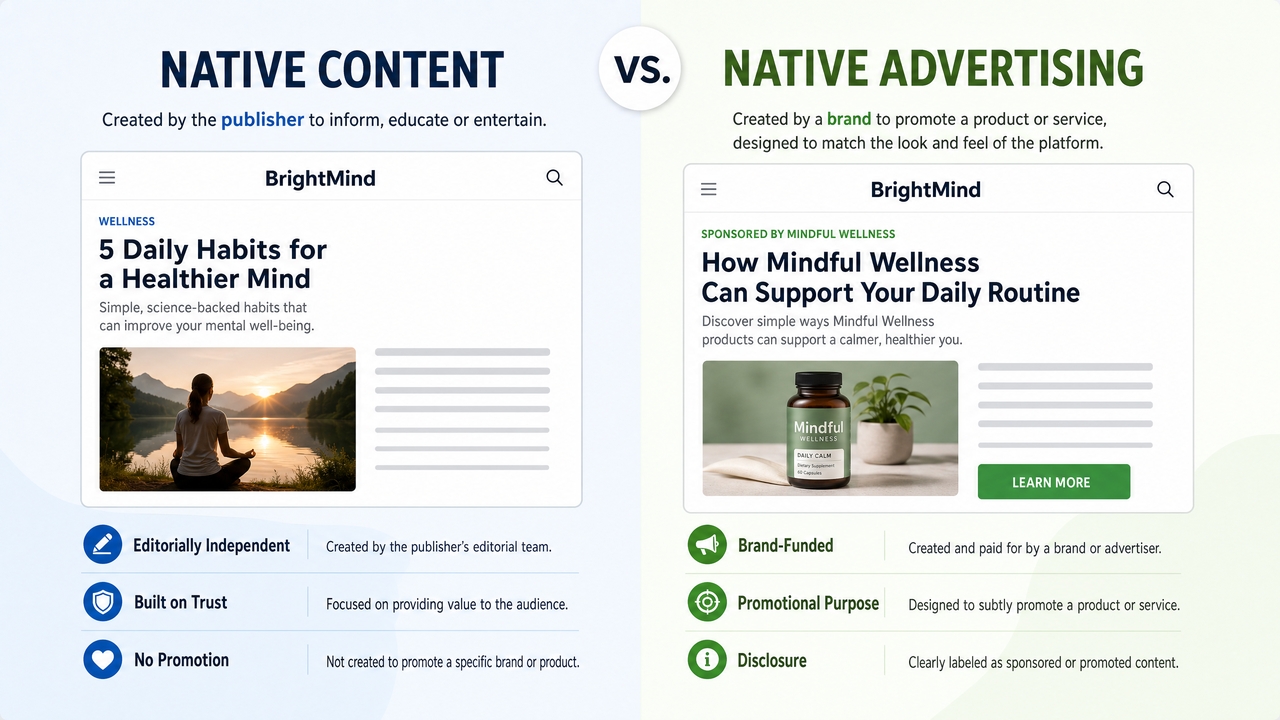
Native content vs. Native advertising: Is there a difference?
The terms are often used interchangeably, and for the most part, they refer to the same thing. However, some marketers draw a slight distinction. Native advertising typically refers to the paid placement itself — the sponsored slot on a publisher's site or platform. Native content refers to the actual material created to fill that slot — the article, video, or infographic that is commissioned and crafted to match the publisher's style.
In practice, native content advertising covers both: the strategy of using paid placements and the content produced to make those placements work. When people ask what native advertising content is, they're usually asking about the full package — the format, the placement, and the creative execution.
How native content works
Native content works by integrating branded messaging into the natural experience of a platform. Instead of appearing as a separate advertisement, the content is designed to match the style, tone, and format of surrounding editorial or social content. Brands collaborate with publishers, websites, or social media platforms to create sponsored articles, videos, posts, or recommendations that provide useful information while subtly promoting a product or service. Users engage with the content because it feels relevant and informative rather than disruptive. This approach helps businesses increase visibility, improve audience engagement, and build stronger connections with potential customers.
How Framia Pro helps you create powerful native content
Framia Pro is an all-in-one AI creative platform that helps brands and creators produce high-quality native content faster and more efficiently. Whether you need social media posts, branded videos, infographics, or platform-specific ads, Framia Pro's intelligent agents and advanced AI models turn ideas into polished, platform-ready native content in minutes.
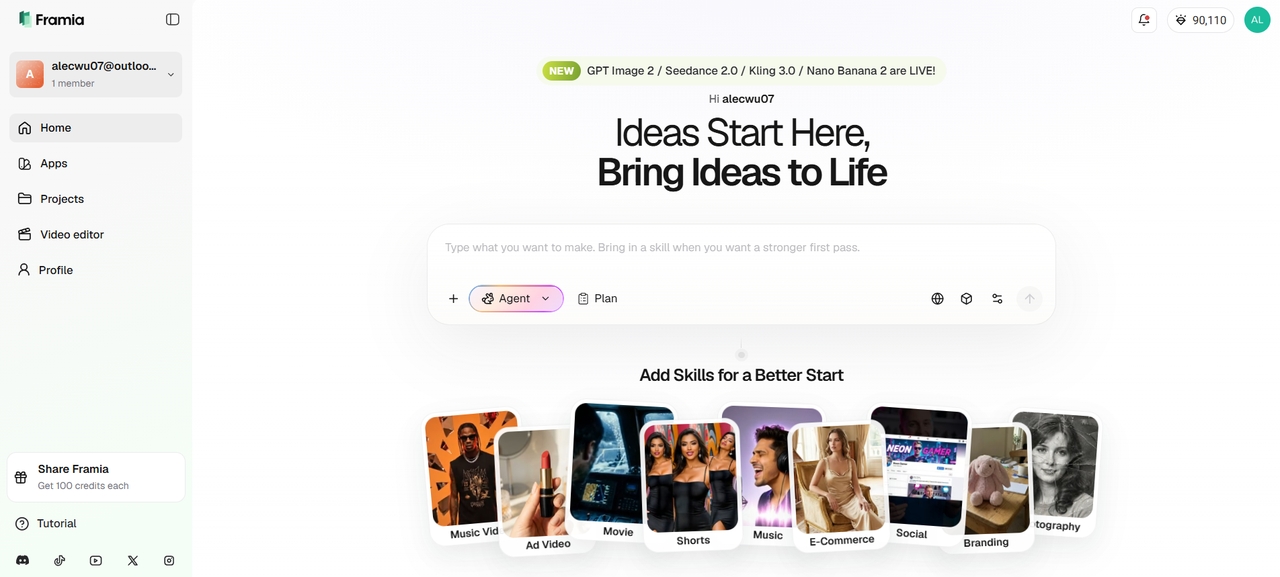
- AI design & video agents: Create character-consistent ad videos, social shorts, and animations that match any platform's style. Use specialized agents to produce high-fidelity visuals that look like professional editorial content rather than disruptive advertisements.
- Intelligent canvas: Edit images and videos using natural language on an intuitive canvas. Point, click, and refine elements to align with specific feed aesthetics, ensuring your native content feels like a seamless part of the user’s organic browsing experience.
- Ad & social media agents: Generate native-looking sponsored posts, reels, and explainer videos optimized for TikTok, Instagram, and LinkedIn. These agents tailor your creative assets to the unique functional and visual requirements of each social media environment.
- Brand-consistent output: Maintain your brand voice, logos, and color palettes across all native content. Framia Pro ensures that while your content blends into the platform, it remains instantly recognizable and aligned with your core brand identity and tone.
- Multimodal mastery: Access leading models like Gemini 3.0, Sora 2, and Veo 3.1 to generate cinematic video, high-res photography, and synchronized music tracks under a single subscription.
Examples of native content
Here are some standout examples of native content that demonstrate how brands successfully blend advertising with valuable storytelling:
- Netflix & The Wall Street Journal – "Cocaineomics"
To promote the series Narcos, Netflix collaborated with WSJ’s custom content team to create an in-depth, interactive article exploring the economics of the global cocaine trade. Complete with charts, timelines, and investigative-style reporting, it perfectly matched the WSJ’s editorial tone while subtly promoting the show. This remains one of the most iconic native content advertising examples.
- Allbirds & The New York Times
The sustainable shoe brand Allbirds published a beautifully designed sponsored article focused on birds, climate change, and environmental conservation. Instead of directly selling shoes, it aligned with Allbirds’ eco-friendly values and delivered genuine educational value to readers.
- Purina & BuzzFeed – "Dear Kitten"
Purina created a humorous and emotional video series in the form of letters from an older cat to a new kitten. It felt like regular BuzzFeed entertainment content while effectively showcasing Purina’s pet food products in a natural, non-intrusive way.
- Mercedes-Benz & The Washington Post
Mercedes partnered with The Washington Post to produce high-quality branded articles and multimedia content exploring innovation, technology, and the future of mobility — perfectly integrated into the publication's premium environment.
Conclusion
Native content represents a smarter, more respectful way to connect with audiences in today’s ad-saturated digital landscape. By blending seamlessly with the platforms and publications people already trust, it delivers genuine value while subtly advancing brand goals—resulting in higher engagement, stronger trust, better recall, and superior ROI compared to traditional ads.
As consumers grow increasingly resistant to overt advertising, native content marketing stands out as one of the most effective strategies for 2026 and beyond. Whether you're a growing brand or an established enterprise, mastering native content allows you to tell your story where your audience already spends their time.
Ready to create scroll-stopping, platform-native content that actually feels native? Start building high-converting native campaigns with Framia Pro today—your all-in-one AI creative partner for faster, smarter, and more authentic content.
FAQs
- What are the different types of native advertising?
Common types include in-feed social ads, sponsored articles, content recommendation widgets, promoted listings, branded videos, and native video ads. Each matches the platform’s format — whether social media, news sites, or apps.
- How much does native advertising cost?
Costs vary widely depending on the platform, audience size, and content quality. CPC can range from $0.10 to $10+, while high-quality sponsored articles or videos on premium publishers often cost several thousand dollars per piece.
- What are the disadvantages of native content marketing?
While highly effective, native content can be more expensive and time-consuming to produce than traditional ads. It may also be harder to measure direct ROI, and poor execution risks being perceived as deceptive, potentially damaging brand trust.
- Does native content help with SEO?
Indirectly, yes. Native content can drive traffic, increase brand mentions, and generate backlinks and social shares. However, the content itself is usually hosted on third-party platforms and does not directly improve your own site’s organic rankings.
- What are the best practices for creating native content?
To create effective native content, deeply understand the platform’s tone, style, and audience. Prioritize delivering genuine value first, then weave in subtle brand messaging. Always use clear sponsorship disclosures, maintain high editorial quality, and ensure seamless visual and functional integration. Test multiple variations for better performance.