
The internet has never been louder. Millions of creators, influencers, and brands fight daily for a few seconds of attention. Yet a quieter shift is underway: Not everyone wants to be the face of their own business. Some worry about privacy. Some genuinely dislike being on camera. Others simply prefer the craft of editing to the performance of presenting. Whatever the reason, a growing number of marketers now build audiences without ever showing their face.
That approach is called faceless digital marketing.
By 2026, what started as a niche workaround has turned into a serious business model. Creators use stock footage, text overlays, voiceovers, and AI tools to build six‑figure channels—no lighting kits, no makeup, no stage fright. But does faceless digital marketing work in reality? And how does someone start from zero? Consider this your comprehensive faceless digital marketing guide, walking you through the definition, practical ideas, real-world examples, and the software that makes the strategy scale.
What is faceless digital marketing?
Faceless digital marketing simply means creating content where the creator's physical identity—face, name, or personal persona—never appears in the final video or post. Instead of a talking head, the audience sees highly curated digital marketing faceless content: stock clips, animations, screen recordings, text overlays, or ambient scenes paired with voiceovers or music.
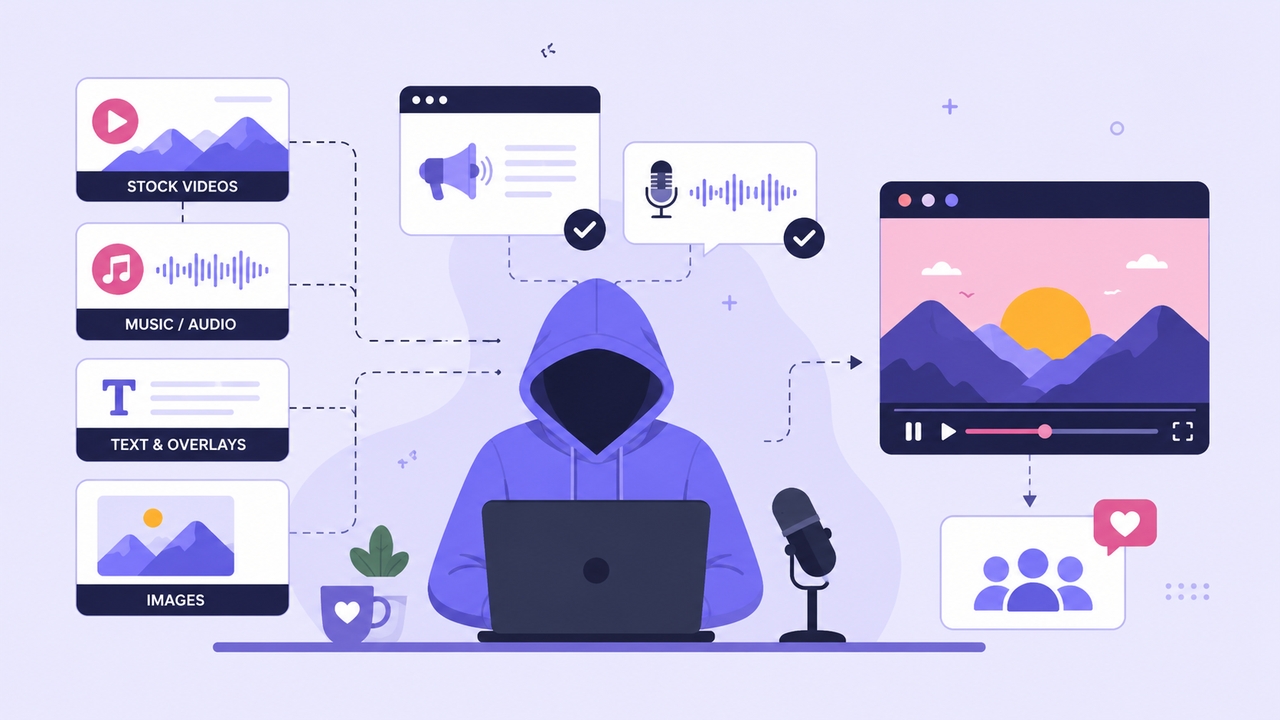
You have probably watched faceless content today without realizing it. A ten‑minute compilation of rainy window footage with lo‑fi music. A "Top 5 strange facts" video set to video game clips. A software tutorial where a calm voice explains settings while the mouse pointer moves across the screen.
These channels earn loyalty through information, aesthetics, or entertainment—not through a recognizable human face.
Why faceless marketing keeps growing
This model of digital faceless marketing did not become popular by accident. It solves real problems that traditional influencers face every day. It also introduces new challenges. The trade‑offs break down like this.
On the plus side: Complete privacy, no risk of doxxing, or online harassment. One person can run several faceless channels—you cannot clone a personality that easily. A single stock clip or AI scene can be reused across dozens of videos. And production costs stay low: No studio lighting, no 4K cameras, no professional makeup.
On the minus side: Editing becomes heavier. Without a face to anchor attention, visuals must be nearly flawless. Trust also takes longer to build; audiences often trust a human face more quickly than a logo. Voice quality matters enormously—a poor AI voice kills viewer retention. And copyright risks are real: Unlicensed music or footage can demonetize a channel instantly.
A simple four‑step framework
Unlike vlogging, where you just press record and talk, faceless content lives or dies in post‑production. Almost every successful faceless creator follows a similar workflow.
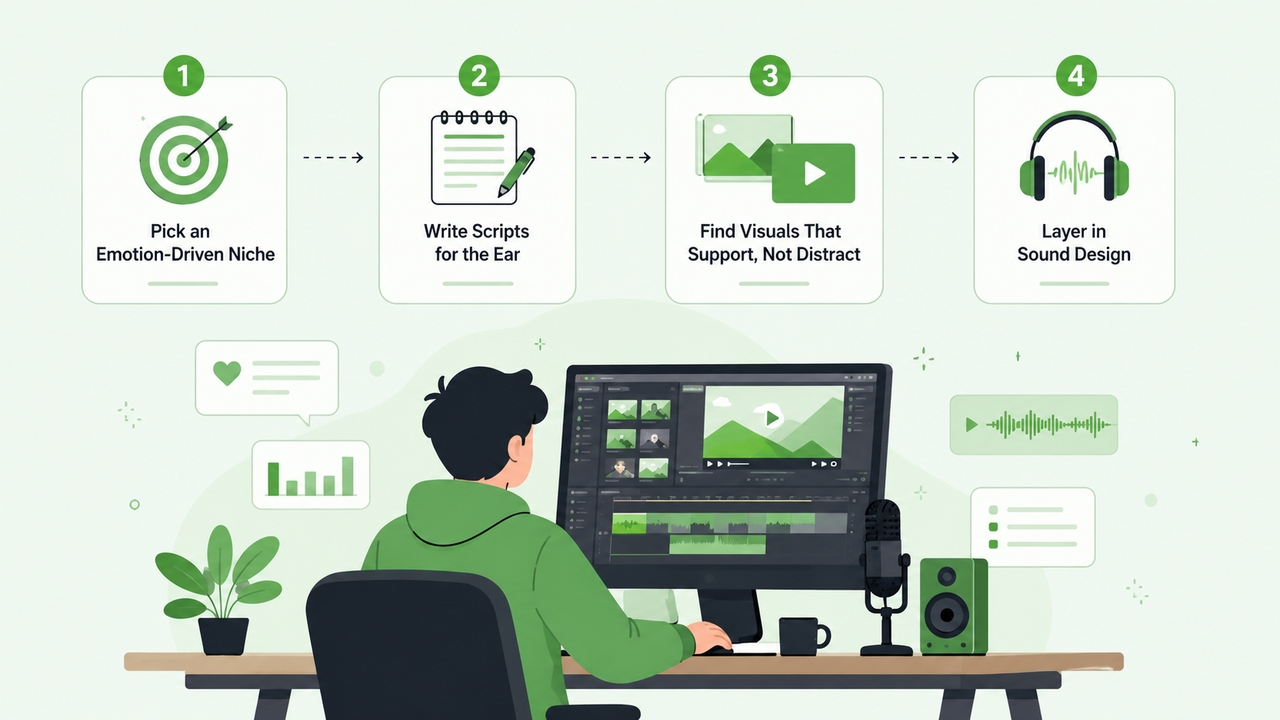
Step 1. Pick an emotion‑driven niche
Faceless videos lack a human anchor, so they have to rely on curiosity or emotion. Strong niches include self‑improvement and psychology (cinematic B‑roll), true crime and history (atmospheric visuals), tech tutorials and software reviews (screen recordings), and finance or wealth mindset (charts and stock footage).
Step 2. Write scripts for the Ear, not the eye
Without a face, your script is the only direct connection to the viewer. Write short, conversational sentences. Ask rhetorical questions. Skip jargon. A good faceless script feels like a knowledgeable friend whispering useful secrets, not a textbook reading aloud.
Step 3. Find visuals that support, not distract
The visuals should reinforce the audio without stealing focus. For a fitness motivation channel, avoid generic gym shots. Use slow‑motion sweat drops or dramatic muscle contractions instead. If you plan to use animated characters or branded mascots in your faceless content, an AI animation generator can turn static logos into smooth motion without manual keyframing.
Step 4. Layer in sound design
Silence is the enemy of faceless videos. Add a low‑volume background track—lo‑fi or cinematic. Layer subtle sound effects: Wind, keyboard clicks, paper rustling. Make sure your AI voiceover sounds warm and naturally paced, not robotic.
10 faceless digital marketing ideas for 2026
If you are exploring faceless digital marketing for beginners, starting with a proven format significantly reduces guesswork. Here are ten high‑potential faceless digital marketing ideas you can launch this week.
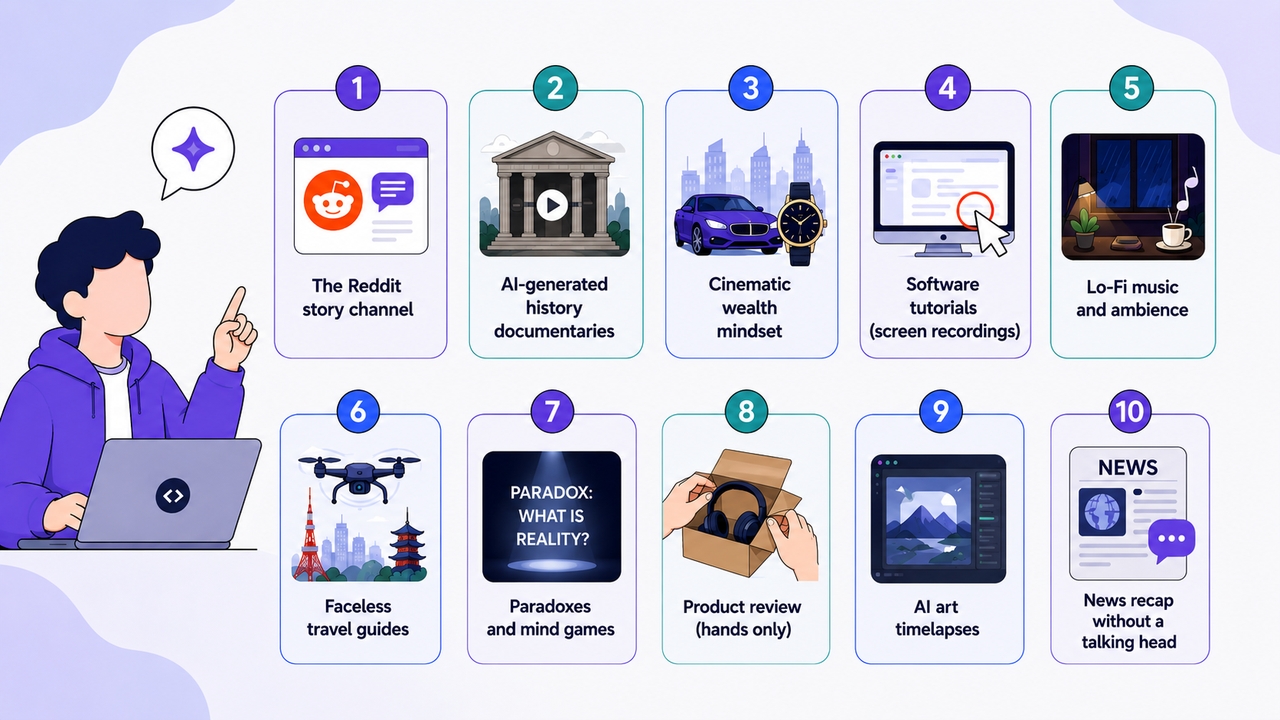
- The Reddit story channel
A voiceover reads popular Reddit posts (from subreddits like "ProRevenge") while gameplay or Subway Surfer footage plays in the background. Monetization comes from YouTube Shorts ads and affiliate links for VPNs or audiobooks.
- AI‑generated history documentaries
Use AI to create static historical images, then animate them with slow camera pans. Pair with a deep, dramatic voiceover. Tools like Midjourney for images, ElevenLabs for voice, and a video editor for maps get the job done.
- Cinematic wealth mindset
Clips of luxury cars, watches, and skyscrapers set to a motivational script about escaping the 9‑to‑5. No face, just aesthetics. It sells a dream. To produce such visuals at scale, try an AI UGC video generator to turn product photos into authentic‑looking user‑generated clips without filming.
- Software tutorials (screen recordings)
Zoom into specific buttons on a screen. Highlight cursor movements with red circles. A voiceover explains how to earn money with the software. If you are wondering how to do faceless affiliate marketing, this is the blueprint: affiliate links for the software itself provide the revenue.
- Lo‑Fi music and ambience
A single looping pixel art animation of a rainy window or cozy study room. Music runs for three hours. The audience: Students and remote workers needing focus sounds.
- Faceless travel guides
Drone footage of a city (Tokyo, Paris, Dubai) with on‑screen text listing costs of living or must‑see spots. No narrator.
- Paradoxes and mind games
A black screen with a white spotlight. Text appears one word at a time—kinetic typography—explaining concepts like "The Ship of Theseus." Best for TikTok and Instagram Reels.
- Product review (hands only)
Only the hands appear, unboxing a product. Close‑ups of textures, buttons, and ASMR‑style sounds. Hiding the face actually directs full attention to the product.
- AI art timelapses
A screen recording of an AI generating an image—from blurry noise to crisp 4K art. Text overlay explains the prompt. The audience is other AI artists and digital creators.
- News recap without a talking head
Apply the Ken Burns effect to newspaper headlines. A fast, slightly robotic voice summarizes tech news. To keep a steady flow of short‑form content, an AI shorts generator can repurpose a ten‑minute documentary into six vertical clips with auto‑captions and smart zoom.
Examples of Faceless Digital Marketing in the Real World
To fully grasp the landscape, look at what the platforms themselves reward. For those in digital marketing, faceless formats are currently favored heavily by the algorithm because they keep viewers watching longer, ensuring high retention.
If you are looking for specific faceless digital marketing examples, take the Alex Hormozi clip channels. Although Hormozi shows his face, many faceless accounts clip his podcast, add aggressive subway surfer gameplay at the bottom, and repost. Those accounts get millions of views without producing any original footage.
Or consider the Solar System TikTok account. It only posts the sound of planets converted into audio frequencies. The visuals are just spinning 3D models of space. No voice, no face. Two million followers.
Then there are automated pet channels. Using stock footage of golden retrievers, a creator adds captions like "POV: You are the favorite child." No voice, just text on screen. For those who want to turn written blog content into faceless videos, an AI explainer video maker can automatically convert an article into a narrated, visual story.
Does faceless digital marketing actually work?
Yes—but with an important nuance. Will this style of content build a deeply loyal, personality-driven community? Rarely. Will it generate passive income through volume, ads, and affiliate sales? Absolutely.

Algorithms do not care about faces. They care about retention—do viewers watch until the end?—and click‑through rate—did they tap the thumbnail? Faceless content often achieves higher retention because it is information‑dense and visually engaging without being distracting.
But faceless brands struggle with loyalty. Your audience stays loyal to the content niche, not to you. If you stop posting true crime, they will find another true crime channel. That means success demands consistency and volume.
The best tools for faceless digital marketing
To execute the ideas above, you need a reliable tech stack. Here is what works in 2026.
- Scripting: ChatGPT or Claude for writing viral hooks.
- Voiceover: ElevenLabs for natural voices, or Microsoft Edge's free "Natural" voices.
- Visuals: Pexels for free stock, Artgrid for paid cinematic, or screen recordings.
- Animation: For cartoon‑style faceless channels, consistent character motion matters.
- Editing: CapCut for auto‑captions, DaVinci Resolve for professional color grading.
Now, here is the thing. That list works. Plenty of successful faceless creators use exactly those tools. But there is a cost that does not show up on any subscription bill: Context switching. You write a script in one tab. You generate a voiceover in another. You hunt for stock footage on a third site. Then you drag everything into an editor and pray the timing lines up. For a single five‑minute video, that dance can eat half a day.
What if you could skip most of those steps without losing quality?
Why Framia Pro works well for faceless marketing
Manually assembling faceless videos means juggling stock subscriptions, voiceover licenses, and complex timelines. A single ten‑minute video can take six hours to edit. Framia Pro removes that friction by acting as a unified creative agent platform. Instead of switching between five different apps, you work with specialized AI agents that handle script‑to‑video generation, asset sourcing, and export formatting inside one canvas.
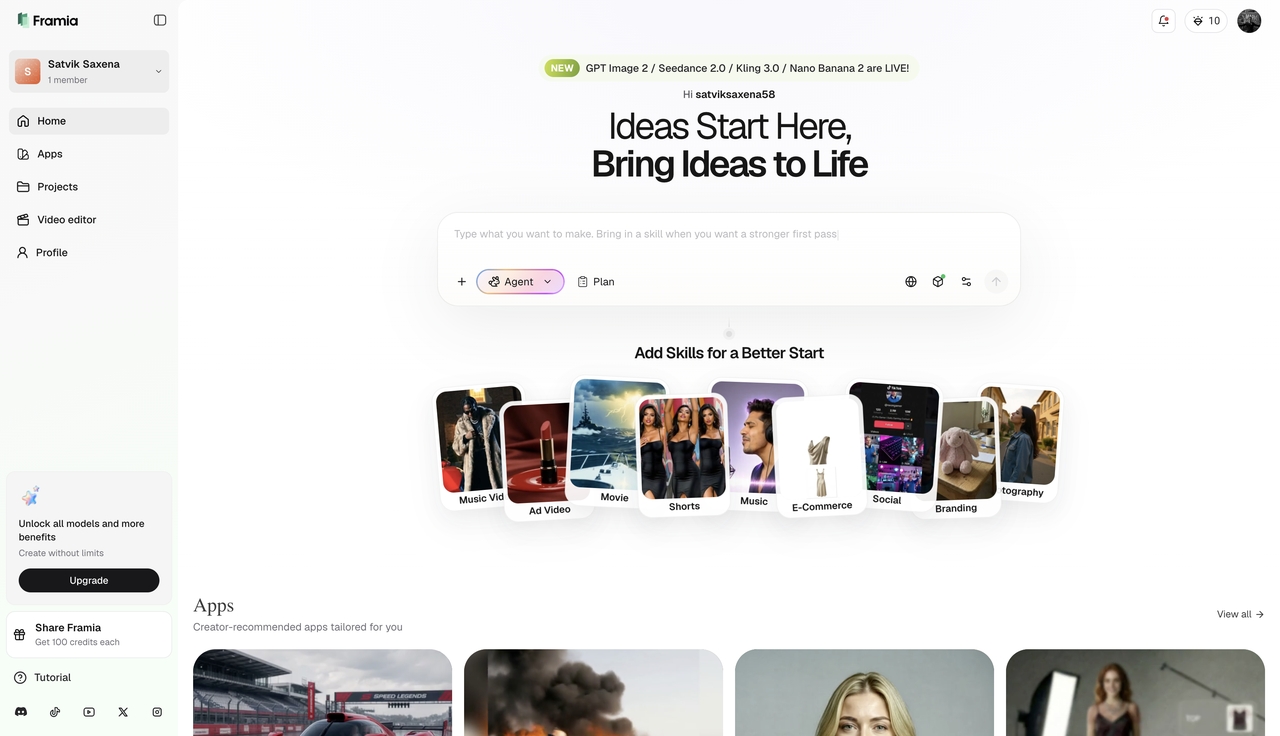
Key features
- Full‑SOP Automation: The platform automates the entire workflow—from script generation and storyboarding to B‑roll context awareness, background music selection, and final export. No step gets left behind.
- Character Consistency for Animations: If your faceless brand uses a recurring mascot, illustrated narrator, or any repeated visual element, Framia Pro keeps that character looking identical across every scene and video. No manual redrawing.
- Chat‑to‑Edit: Select any video segment or design layer, then type a simple command like "make the background darker" or "zoom in on the product." The AI executes the change without regenerating the whole project.
- Multi‑Model Integration: Access frontier video models—Sora 2, Veo 3.1, Kling 3.0, and others—inside a single platform. You are never locked into one engine's limitations.
- Specialized Creative Agents: Dedicated agents for Shorts, Movies, Ads, and Music Videos handle end‑to‑end production for each format. Describe your idea once; the agent handles the rest.
Putting it all together
Faceless digital marketing is not a get‑rich‑quick scheme. It is a creative discipline that prioritizes storytelling over stardom. By removing the pressure of being on camera, you can focus entirely on value: Better scripts, cleaner audio, more engaging visuals. Whether you want to test a niche anonymously or scale a media brand without ever showing your face, the tools available in 2026 make this the most accessible moment yet to start.
For those ready to skip the manual editing grind, platforms like Framia Pro offer a direct path. Its AI TikTok video generator alone can turn a simple prompt into a fully edited vertical short—complete with trending sounds and captions—in under two minutes. Start with one format, master your sound design, then gradually add cinematic layers. With consistency, your faceless brand can become the most recognizable name in your niche.
FAQs
- Can you genuinely earn money with faceless digitial marketing?
Yes. Top earners use YouTube Ad revenue, TikTok Creativity Program funds, and affiliate marketing (promoting tools like VPNs or software). Without a face, you rely entirely on content value, which algorithms reward.
- Do I have to use my real voice?
No. AI text‑to‑speech is fine. However, using the same AI voice across all videos helps build audio branding—viewers come to recognize "the voice of this channel."
- Is faceless marketing allowed on YouTube or TikTok?
Yes. Both platforms permit it. But you cannot simply re‑upload others' content. You must add significant value—voiceover, editing, or commentary. Transformative use is legal; direct copy‑paste is not.
- What is the easiest faceless niche for a beginner?
Motivational quotes with relaxing nature footage. The script is simple (famous quotes), the visuals are abundant (free stock forests or oceans), and editing requires only text overlays and fade transitions.
- How can I avoid copyright strikes?
Use royalty‑free music (YouTube Audio Library), AI‑generated visuals, or licensed stock (Envato Elements). Never screen record Netflix or Disney. When in doubt, apply the "Commercial Use" filter on stock websites.