
Welcome to the most fiercely contested battleground in global entertainment: subbing vs. dubbing. Whether you are an anime aficionado, a foreign film enthusiast, or a casual Netflix binger, you have likely picked a side.
Subtitles offer the raw, authentic emotion of the original actors but demand your undivided visual attention. Dubbing provides a seamless, localized experience, freeing your eyes but sometimes sacrificing the creator's original intent.
In this comprehensive guide, we will break down the differences, weigh the pros and cons, and help you decide when to read and when to listen.
What is sub and dub: understanding the basics
Before we declare a winner or dive into the nuances of when to use which, it is crucial to understand exactly dubbed vs subbed meaning. Both are complex localization processes designed to make media accessible to a global audience, but they take entirely different approaches to the art of translation.
What is subbing (subtitling)?
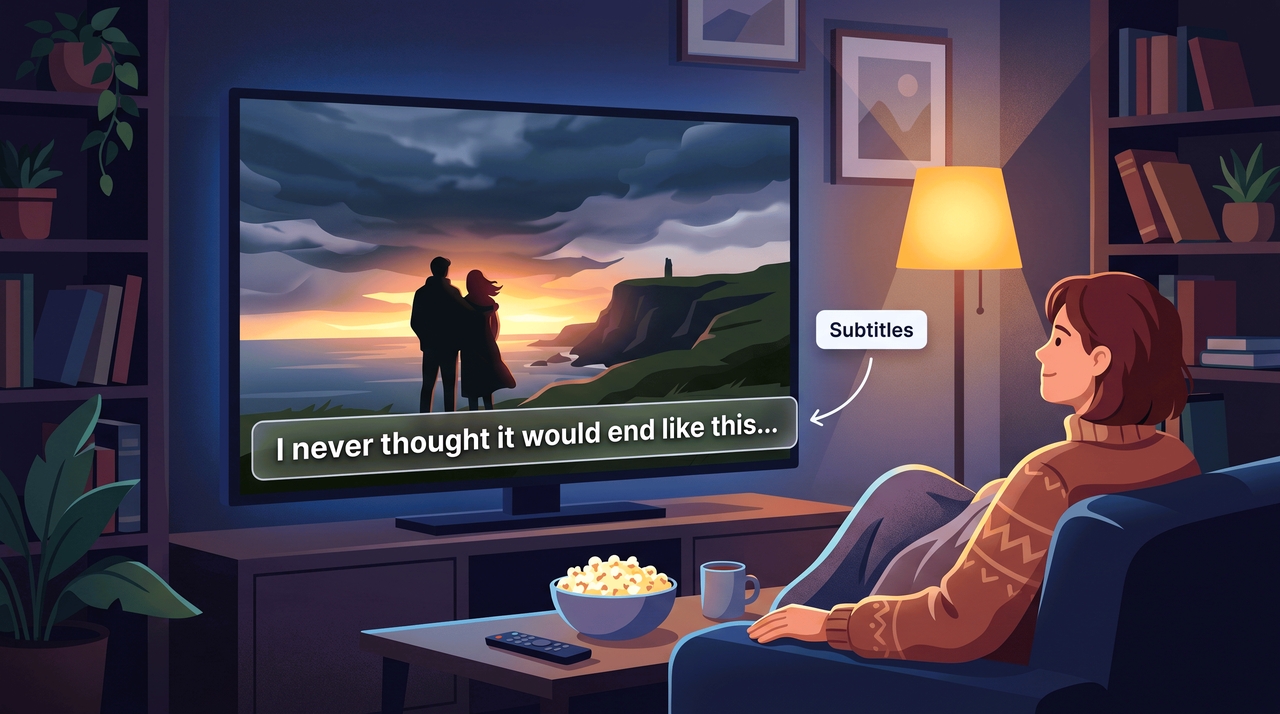
Subtitling involves displaying text on the screen that translates the spoken dialogue into the viewer's language. The original audio track remains intact. However, subbing is not just typing out a direct translation.
Professional subtitlers (often called "spotters") must condense dialogue so it can be read comfortably in the limited time it appears on screen. They have to balance reading speed, character limits per line, and the timing of cuts in the video, all while trying to maintain the original meaning, humor, and tone.
What is dubbing?
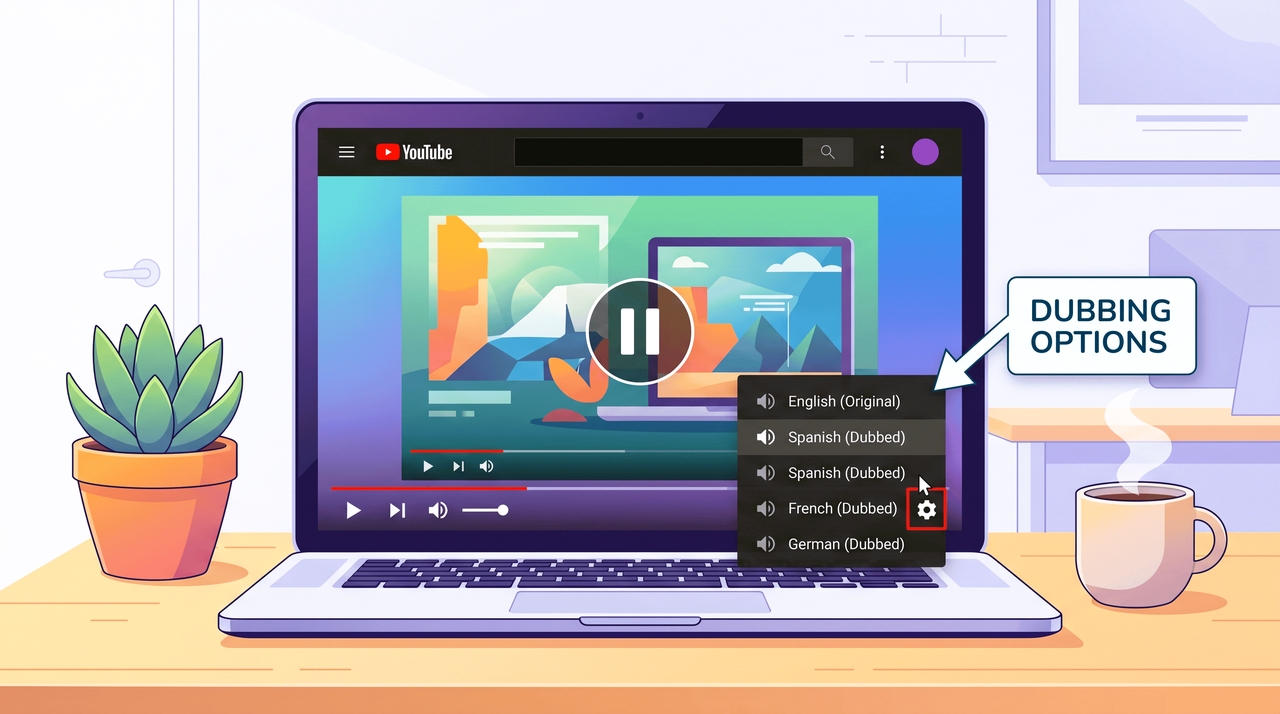
Dubbing is the process of replacing the original vocal audio track with a new track recorded in the viewer's language. This is a highly technical and artistic endeavor.
It requires translators to adapt the script not just for meaning, but for "lip-sync" (matching the translated words to the lip movements of the on-screen actors) and "kinetic sync" (matching the words to the actors' body language and gestures). Voice actors must then deliver these lines with the same emotional intensity as the original cast.
Behind the scenes: the subbed vs dubbed workflow
To truly appreciate the art of both methods, it helps to look at the step-by-step process professionals use to bring foreign media to your screen.
The subtitling process
| Transcription | A professional transcribes the original audio into a master script, noting important sound cues. |
| Translation | Translators convert the script into the target language, focusing on cultural nuances and context rather than literal word-for-word translation. |
| Spotting (Timing) | This is the most crucial technical step. A "spotter" aligns the translated text with the video. They dictate exactly when a subtitle appears and disappears, ensuring it stays on screen long enough to be read (typically 12 to 17 characters per second) without crossing over scene cuts. |
| Condensing and editing | Because reading is slower than speaking, the text is often condensed. The editor ensures the sentence structure is easy to process at a glance. |
| Quality Control (QC) | Reviewers watch the subtitled video to check for typos, pacing issues, and translation accuracy. |
How to subtitle easily with Framia Pro?
Framia Pro is an advanced, all-in-one AI creative agent platform that revolutionizes the subtitling process through its intelligent, conversational interface.
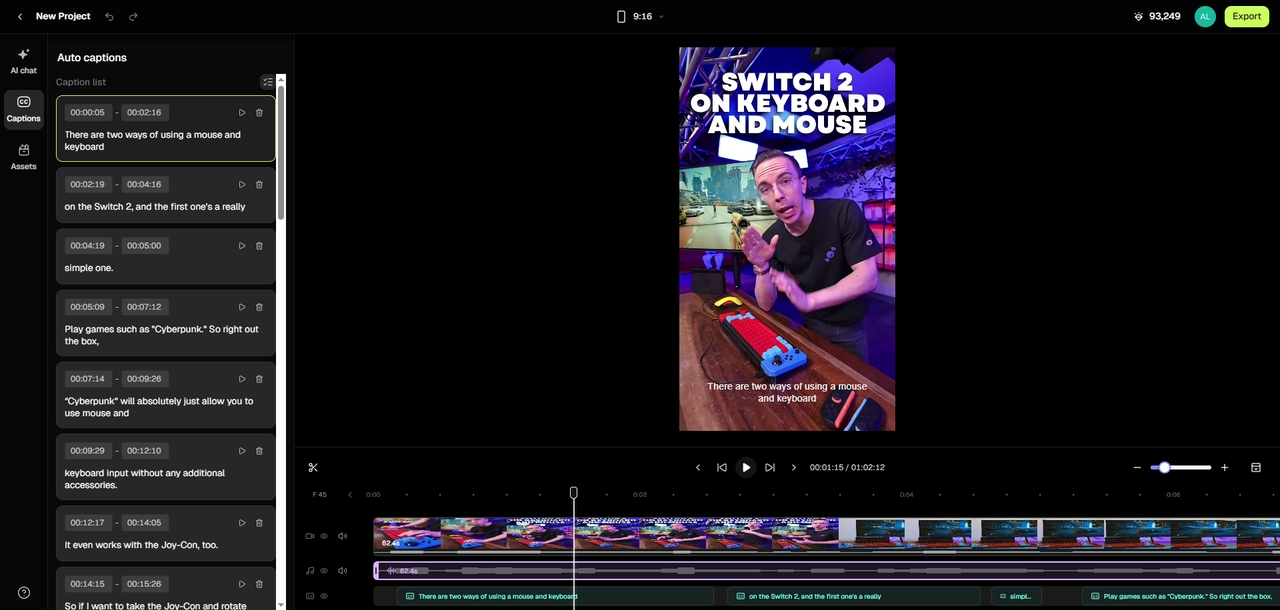
Instead of manually spotting and transcribing audio using complex timeline editors, creators can leverage Framia Pro’s automated speech detection and chat-based editing to generate perfectly synced, highly accurate captions for social media or cinematic projects with virtually no technical friction.
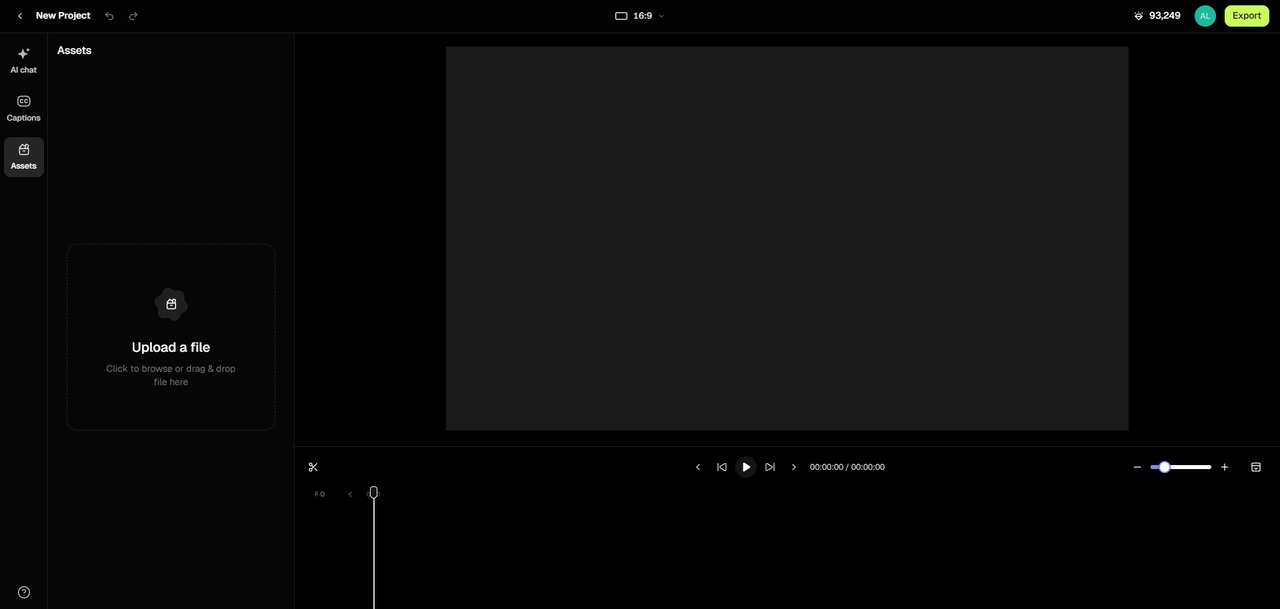
Step 1: Upload your video file
Select the "Video Editor" option from the left-hand menu of Framia Pro's dashboard, and then import/upload your video into the Framia Pro canvas.
Step 2: Auto-generate captions
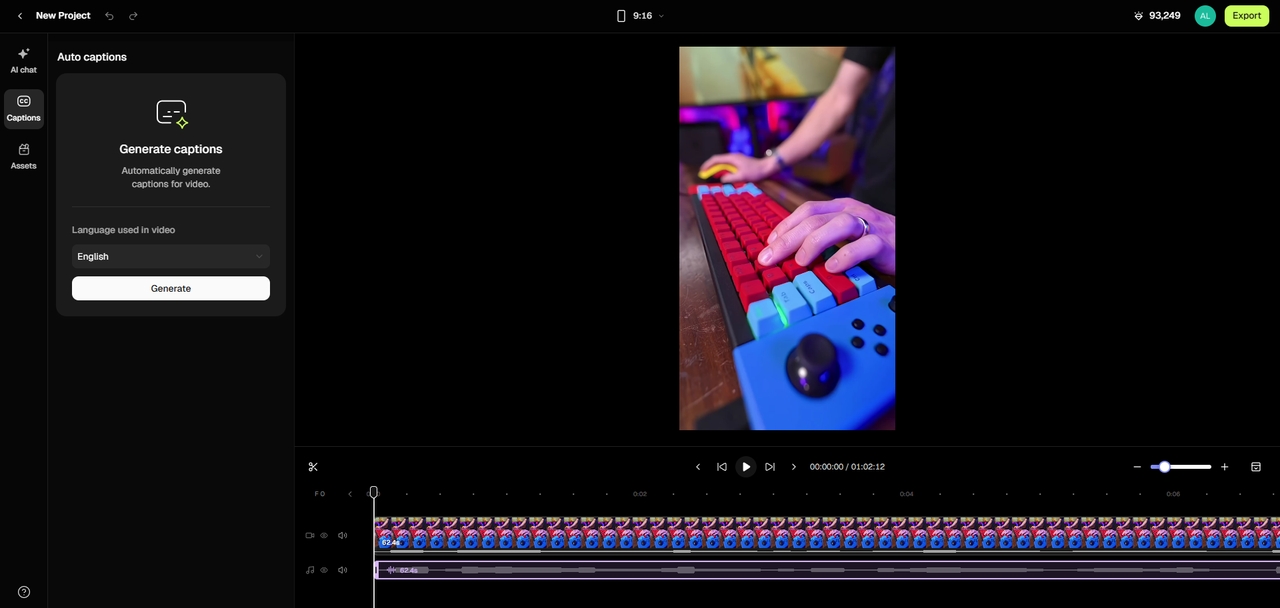
From the left-hand menu again, select the "Captions" option. After that, select your preferred language and click on "Generate".
Step 3: Review & export
Check the auto-generated text for any minor corrections, and if you are satisfied, you can download your subtitled video successfully.
The dubbing process
| Translation and adaptation | Like subbing, it starts with translation. However, the writer must then adapt the translation to match the exact length of the original line and the mouth flaps of the characters (lip-sync). If an English phrase is much shorter than the original Japanese phrase, the writer must add words to fill the visual space. |
| Casting | A dubbing director auditions voice actors, looking for vocal textures and emotional ranges that match the original cast. |
| Recording (ADR - Automated Dialogue Replacement) | Voice actors step into the booth. Unlike stage acting, they perform while watching a monitor, matching their delivery precisely to the on-screen character's lip movements and kinetic gestures. |
| Mixing and mastering | Audio engineers take the newly recorded vocals and blend them seamlessly with the "M&E" (Music and Effects) track. They add necessary audio effects, like making a voice sound like it's coming through a telephone or echoing in a cave, so the new dialogue sits naturally within the show's soundscape. |
How to dub quickly with Framia Pro?
Framia Pro transforms the traditionally expensive dubbing workflow into an accessible, AI-driven process. Utilizing industry-leading models like ElevenLabs and Kling 3.0, Framia Pro allows creators to perform seamless multilingual dubbing, voice cloning, and flawless lip-syncing. By interacting with specialized AI agents on an intuitive canvas, users can replace vocal tracks and adapt their cinematic content for global audiences instantly.
Step 1: Select the "Video Agent"
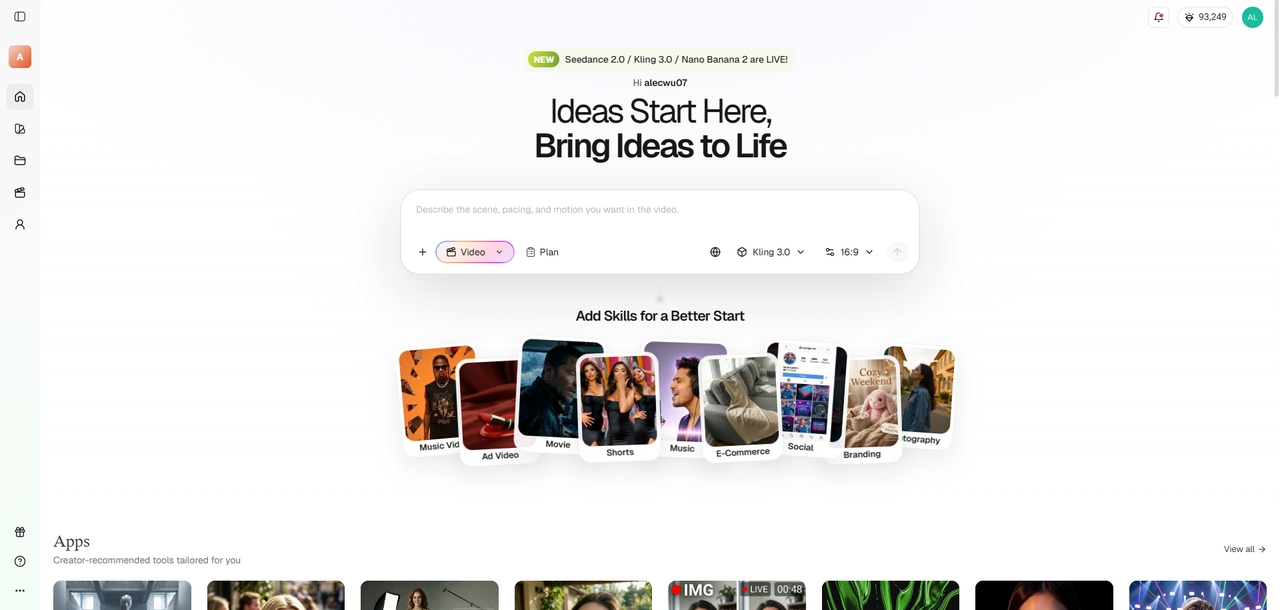
Open your video in Framia Pro and select the "Video Agent" from the drop-down menu. Additionally, select your AI video generation model, be it Kling 3.0, Veo 3.1, or Seedance 2.0.
Step 2: Upload video & enter prompt for dubbing
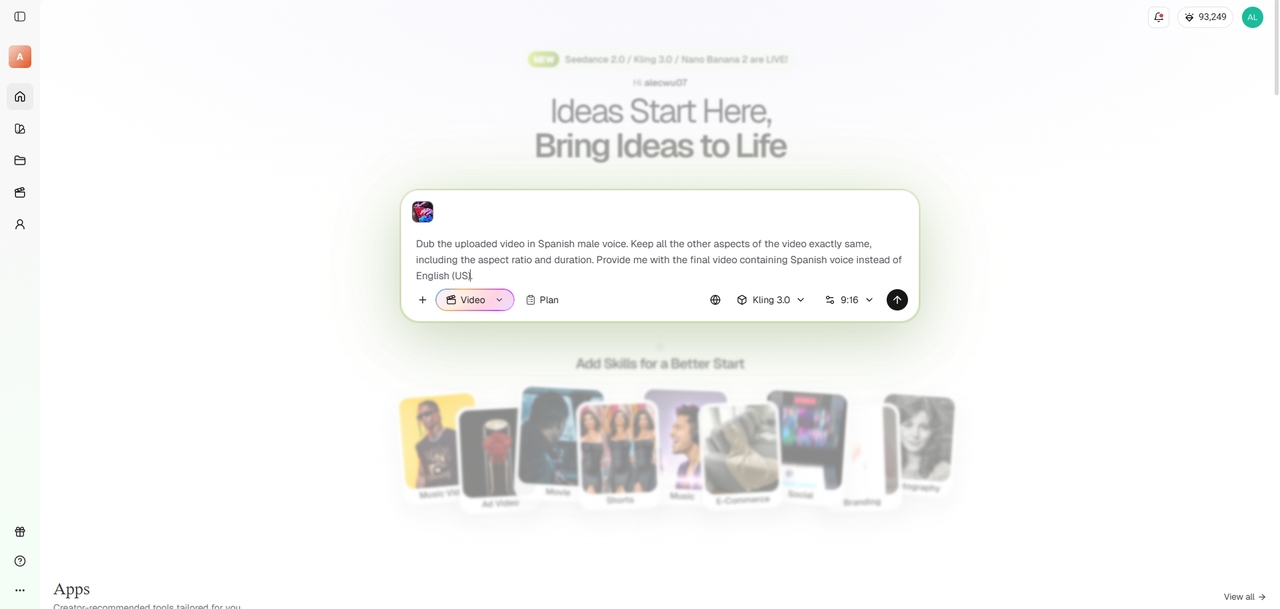
Upload your video file and then provide a detailed prompt for commanding the AI to automatically translate your script and generate a natural-sounding voiceover, in your language of choice.
Step 3: Finalize & export
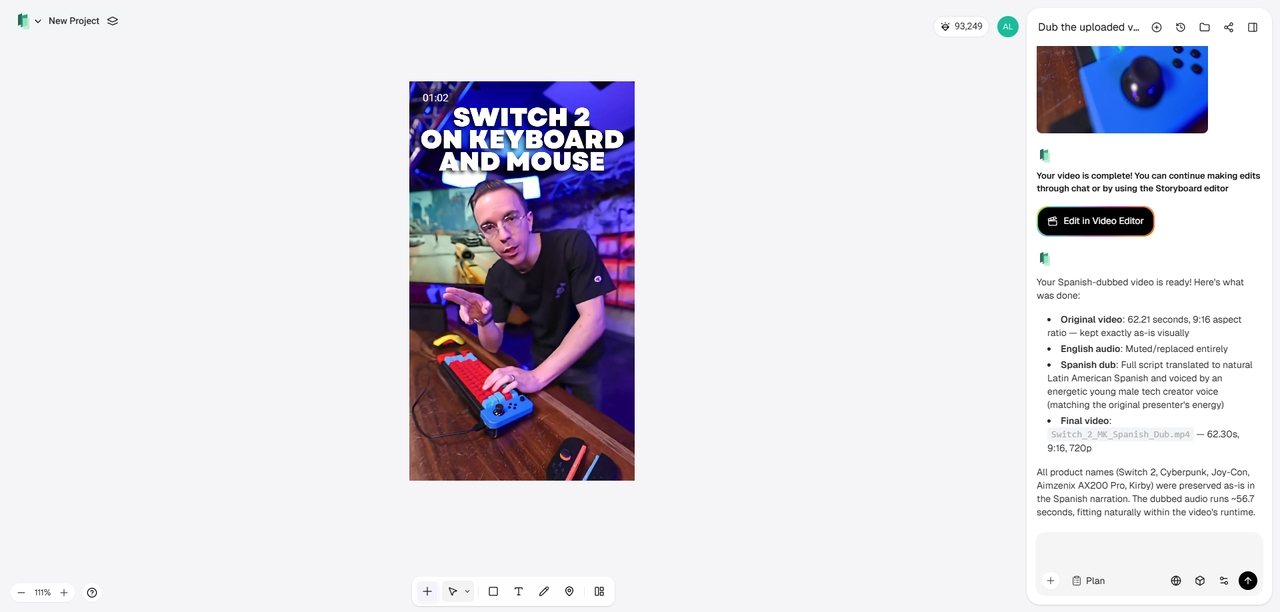
Framia Pro will start the dubbing process, and once that is done, you will be able to playback the video to properly see the dubbing effect. If you are happy with the results, be sure to download it for further sharing.
What's the difference between subbed and dubbed?
The debate between subbing and dubbing usually boils down to a clash between two primary viewing priorities: the desire for an authentic experience versus the desire for a seamless, accessible one.
- The preservation of original performance
Subbing: Subbing preserves the original audio. You hear the exact intonation, pacing, breathing, and emotional weight delivered by the original actors, as directed by the original creator.
Dubbing: Dubbing, by its very nature, introduces a new artistic layer. A dubbing director and voice actor interpret the scene and deliver their own version of it. While modern dubbing is excellent, it is still an interpretation.
- Visual focus and immersion
Subbing: With subtitles, your eyes are constantly darting between the bottom of the screen and the center of the action. In visually dense media, like a fast-paced action sequence or a beautifully framed cinematic shot, reading text can cause you to miss subtle visual cues.
Dubbing: Dubbing allows your eyes to remain entirely focused on cinematography, facial expressions, and visual storytelling.
- Translation accuracy vs. lip-sync constraints
Subbing: Subtitles generally offer a more accurate translation of the dialogue. Because subtitlers only have to worry about reading speed, they can stay closer to the original text.
Dubbing: Dub translators, however, are restricted by the on-screen actor's mouth movements. If a character says a short word in Japanese, but the English translation is a long sentence, the dub translator must completely rewrite the line to fit the visual timing, which often changes the original phrasing or nuance.
Subbing vs dubbing: crucial pros and cons of each process
Subbing
Subtitles have long been the gold standard for cinematic purists, festival attendees, and language learners. However, while they successfully preserve the creator's original performance, they also demand a much higher level of continuous visual engagement. Let's explore the distinct advantages and disadvantages of choosing to read your media.
| Advantages | Disadvantages |
| 100% Original Audio: You experience the media exactly as it was originally recorded, preserving the cultural and emotional authenticity of the original cast.Better Translation Accuracy: Without the strict constraints of lip-syncing, translators can convey the nuance of the original language more faithfully.Language Learning Aid: Watching foreign media with subtitles is a proven way to pick up vocabulary, pronunciation, and the cadence of a new language.Accessibility: Subtitles (and specifically Closed Captions, which also include non-speech audio cues) are vital for deaf and hard-of-hearing communities.Faster Production and Lower Cost: Subtitling is significantly cheaper and faster to produce than dubbing, which is why independent films and niche anime are often only available subbed. | Visual Distraction: Reading text distracts from visual artistry. You might miss a subtle background detail or a micro-expression on an actor's face because you were reading.Pacing Issues: In dialogue-heavy or fast-paced scenes, subtitles can flash across the screen too quickly for some viewers to read comfortably.Requires Undivided Attention: You cannot look down at your phone, cook, or do chores while watching subbed content. If you look away, you lose the narrative. |
Dubbing
Dubbing offers a relaxed, localized viewing experience that frees viewers to fully absorb the visual spectacle without distraction. While the quality of modern dubs has skyrocketed thanks to major streaming platforms, replacing the original audio still comes with inherent compromises. Here is a closer look at the benefits and drawbacks of opting for dubbed content.
| Advantages | Disadvantages |
| Visual Freedom: Your eyes are free to roam the screen. You can fully appreciate cinematography, action choreography, and visual effects without distraction.Multitasking Friendly: Dubbed content allows you to treat the media almost like a podcast or radio play. You can look away from the screen momentarily without completely losing the plot.Accessibility for Non-Readers: Dubbing is essential for young children who haven't learned to read quickly enough yet, as well as for viewers with visual impairments or learning disabilities like dyslexia.Cultural Localization: Good dubs often adapt jokes, idioms, and cultural references so that they land naturally with the target audience, making the media feel more relatable. | Loss of Original Tone: Even the best voice actor gives a different performance than the original actor. Sometimes, emotional resonance just doesn't hit the same way.The "Uncanny Valley" of Lip-Syncing: In live-action media, watching an actor's mouth form different shapes than the words you are hearing can be incredibly jarring and pull you out of the experience.Translation Sacrifices: To make the words match the mouth movements, translators often have to compromise on the accuracy of the dialogue. |
Context matters: when to use subbing vs dubbing?
The "right" choice often depends heavily on what you are watching and who is watching it. Here is a breakdown of when each method truly shines.
- Anime and animation
The Verdict: It's a toss-up (leaning towards dubs for action, subs for drama)
When it comes to sub vs dub in anime, it should be known that animation is the one medium where dubbing often matches or even exceeds the original. Because animated characters' mouths are usually just simple flaps (especially in traditional anime), lip-syncing is much easier to fake.
- Use Subs: If you are watching a slow-burn, emotional drama, or a slice-of-life anime heavily reliant on Japanese cultural puns.
- Use Dubs: If you are watching high-octane action (like Dragon Ball Z or Kochikame). Reading text during hyper-kinetic fight scenes detracts from the incredible animation.

- Live-action movies and TV shows
The Verdict: Subbing usually wins
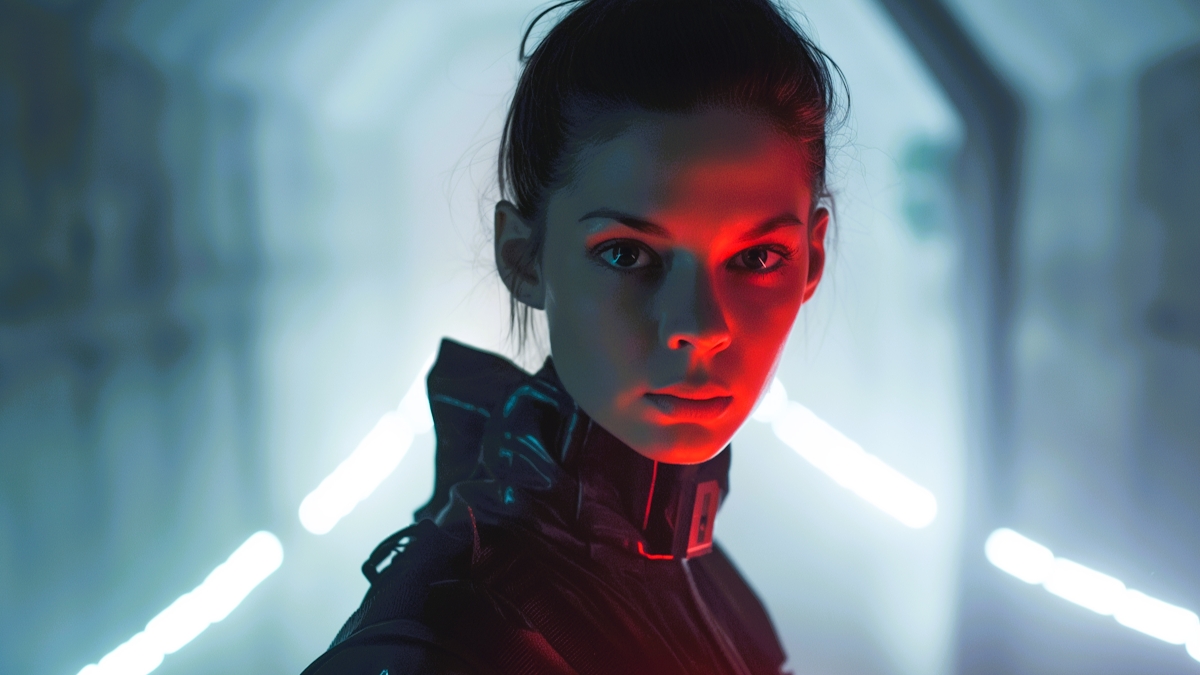
When it comes to live-action, subtitles are generally the preferred choice for critics and purists. The human brain is incredibly adept at reading facial cues and lip movements. When you watch a French actor speaking emotionally, but an English voice comes out of a mouth shaped for French vowels, it creates a cognitive dissonance that can ruin immersion. The global success of Parasite and Squid Game proved that mainstream audiences are highly willing to read subtitles for a superior, authentic acting performance.
- Video games
The Verdict: Dubbing is king
Video games are interactive. You have to focus on health bars, mini-maps, incoming enemies, and complex button combinations. Forcing a player to read a block of text at the bottom of the screen while they are trying to dodge a boss attack is bad game design. For action-RPGs and fast-paced games, dubbing is almost essential for a good user experience.

- Comedy
The Verdict: It depends on the type of comedy
Comedy is famously difficult to translate. Physical comedy or situational humor works well with either. However, if a show relies on rapid-fire wordplay, puns, or specific cultural references (like a Japanese Manzai routine), subtitles with translator notes are often the only way to convey the joke, even if it disrupts the pacing. Conversely, a brilliant dub localization team can rewrite a joke to make it culturally relevant to the viewer, preserving the feeling of humor rather than the literal translation.

Signing off
Ultimately, the choice between subbing and dubbing is not about right or wrong; it is about prioritizing different aspects of the viewing experience.
If your primary goal is to respect the original artistic vision, study a language, or experience the raw emotion of the on-screen actors, subtitles are your best friend. If you want to lose yourself in breathtaking visuals, multitask, or share media with younger or diverse audiences, dubbing is an invaluable tool.
The best part of modern media consumption is that we no longer have to choose just one. Almost all streaming services now offer a toggle switch. You can watch a fast-paced anime dubbed to enjoy the visuals, and then switch to subs for an intense live-action Korean thriller to catch the nuances of the acting.
So, don't let the purists gatekeep your entertainment. Try both, see what fits the specific piece of media you are consuming, and enjoy the ever-expanding world of global storytelling.
Frequently Asked Questions (FAQ)
- Which is better for learning a new language, subbing or dubbing?
Subbing is significantly better for language learning. Reading subtitles while listening to the original audio helps you quickly grasp vocabulary, pronunciation, and the natural cadence of a new language.
- Why do some dubs look weird when the characters speak?
This happens due to lip-syncing constraints. Translators must rewrite dialogue to match the original actor's mouth movements, sometimes creating a slight, unnatural visual disconnect known as the uncanny valley.
- Does reading subtitles ruin the visual experience of a movie?
It can occasionally distract you from subtle visual cues or background details. However, many viewers quickly adapt, allowing them to absorb both the text and the cinematography seamlessly.
- Why are independent foreign films usually subbed instead of dubbed?
Dubbing requires hiring voice actors, directors, and sound engineers, making it an expensive process. Subtitling is much cheaper and faster, making it the practical choice for lower-budget independent films.
- Are dubbed versions less accurate than subtitled versions?
Yes, generally. Dubbing teams often sacrifice literal translation accuracy to ensure the new dialogue matches the on-screen character's lip movements and the specific timing of the original video cuts.