
According to recent industry data, more than 3 billion people worldwide watch digital video content at least once a month. That is a massive global audience actively engaging with dynamic content. However, simply recording a video and uploading it to the internet is no longer enough to guarantee success. To truly harness the power of this medium, you need a highly structured, well-thought-out video marketing strategy.
In this comprehensive guide, we will cover everything you need to know about video marketing: what it is, its unignorable benefits, the hurdles you might face, and a step-by-step framework to create a strategy that drives real business results. We will also dive into distribution channels, industry-specific tactics, and expert tips to ensure your videos stand out in a crowded marketplace.
What is a video marketing strategy?
At its core, video marketing is the integration of video content into your broader promotional, sales, and branding efforts. It involves creating videos that feature your business, products, employees, or customers to deliver a compelling message to your target audience.
A video marketing strategy, however, is the blueprint that guides this content creation. It is the "who, what, where, when, and why" of your video efforts. A strong strategy dictates:
- Who you are making the video for (your target audience).
- What kind of video you are making (the format and message).
- Where you will publish it (the distribution channels).
- When you will publish it (the release schedule).
- Why you are making it (your specific business goals and KPIs).
Without a strategy, you are just guessing. With a strategy, video becomes a measurable, scalable tool that seamlessly moves prospects through your marketing funnel—from initial brand awareness to final purchase and long-term loyalty.

The unignorable benefits of video marketing
Producing high-quality video content requires time, effort, and budget. However, the return on investment (ROI) makes it one of the most lucrative marketing channels available today. Here is why your brand needs to prioritize video.
- Improves SEO and search engine rankings
Search engines like Google prioritize diverse, engaging, and relevant content. High-quality video keeps visitors on your website longer, significantly increasing your site's "dwell time"—a critical metric that tells search algorithms your content is valuable. Furthermore, videos optimized with the right keywords in their titles, descriptions, and transcripts are highly likely to appear in organic search results and AI overviews, driving massive amounts of organic traffic to your brand.
- Skyrockets engagement and retention
Humans are visual creatures. Videos are inherently more engaging than static images or blocks of text. The combination of moving visuals, compelling audio, and narrative storytelling captures attention quickly and holds it longer. When shared via email or social media, videos consistently generate higher open rates, click-through rates, and share rates than any other medium.
- Builds trust and authenticity
Trust is the currency of modern business. Video allows you to humanize your brand. By showcasing the real people behind your products, sharing behind-the-scenes footage, or presenting authentic customer testimonials, you break down the digital barrier between business and consumer. Seeing a face and hearing a voice creates a parasocial relationship and an emotional connection that text simply cannot replicate.
- Boosts conversions and sales
The ultimate goal of most marketing campaigns is to drive revenue. Video is a phenomenal conversion tool. Adding a product demonstration or an explainer video to a landing page can increase conversion rates dramatically. When customers can see a product in action, understand its scale, and visualize how it solves their pain points, they are much more likely to click the "Buy Now" button.
- Fosters brand awareness and virality
In a crowded digital ecosystem, a dynamic video can cut through the noise. Because video is the preferred format on massive platforms like TikTok, Instagram, and YouTube, it has the highest potential for shareability. A clever, emotional, or highly educational video can be shared thousands of times, introducing your brand to entirely new audiences at zero additional cost.
Types of marketing videos you should know about
To build an effective strategy, you must choose the right type of video for your specific goal. Here are the most common formats:
- Commercials / Promo Videos: These are brief, high-energy videos designed to highlight your brand's best features. Often used as paid ads on YouTube, streaming services, or social media, they are perfect for broad brand awareness.
- Explainer Videos: Usually animated or heavily visual, these videos simplify complex ideas, products, or services. They are excellent for the consideration phase of the buyer's journey.
- How-To / Educational Videos: These provide step-by-step instructions or hands-on demonstrations. By educating your audience, you build authority and establish your brand as an industry expert.
- Product Demo Videos: Focused purely on the product, these videos show exactly how an item works, highlighting its features and benefits. They are ultimate bottom-of-the-funnel conversion tools.
- Customer Testimonials: Also known as case studies, these videos feature satisfied customers sharing their success stories. They provide powerful social proof.
- Behind-the-Scenes (BTS): BTS videos showcase your company culture, manufacturing process, or daily operations. They humanize your brand and build deep community loyalty.
- Personalized Messages: Leveraging automation, brands can send individualized videos (e.g., a post-purchase "thank you" using the customer's name) to delight users and boost retention.
- Event / Live Videos: Broadcasting conferences, webinars, or product launches in real-time creates a sense of FOMO (Fear Of Missing Out) and encourages immediate, real-time engagement from your community.

6 steps to create a bulletproof video marketing strategy
Now that you understand the "why," it is time to execute the "how." Follow these six steps to build a strategy that works.
Step 1: Determine your goals and KPIs
Never start recording without a clear objective. What does success look like for this specific video campaign?
- Goal: Brand Awareness. KPIs: View count, impressions, reach, social shares.
- Goal: Consideration/Education. KPIs: Watch time, completion rate, engagement (likes, comments).
- Goal: Conversion. KPIs: Click-through rate (CTR), sales, sign-ups, cost per acquisition (CPA).
Step 2: Define your target audience
A video meant for a 60-year-old corporate executive will look drastically different from a video meant for a 20-year-old college student. Build buyer personas. Ask yourself: What are their pain points? What platforms do they spend their time on? Do they prefer short, snappy entertainment or long-form, detailed educational content?
Step 3: Set your budget and resources
Decide early on how much you are willing to spend. Your budget will dictate whether you hire an external creative agency, bring on a full-time in-house videographer, or shoot scrappy DIY content using your marketing team's smartphones. Remember to allocate a portion of your budget to distribution (paid ads, boosting posts) and not just production.
Step 4: Plan the content and storyboard (pre-production)
This is where the magic happens. Based on your goals and audience, choose the right type of video (e.g., a how-to, a testimonial). Write a script. Create a storyboard, a scene-by-scene visual outline of the video. Planning your shots, locations, and talent in advance will save you immense time and money during the actual shoot.
Step 5: Execute and edit (production & post-production)
During the shoot, prioritize audio quality and lighting. Once the footage is captured, move to post-production. This involves cutting the footage, adding background music, incorporating your brand colors and logos, and adding on-screen text or motion graphics. Pro tip: Always create multiple variations of the edit (e.g., a 60-second version, a 15-second version) for different platforms.
Leveraging AI video generation
If you are short on resources, then you can easily create professional marketing videos using AI. Tools like Framia Pro allow you to generate high-quality video content from simple text prompts, automating the production process and saving you hours of editing time.
How to use Framia Pro for creating marketing videos easily?
To start using Framia Pro, simply follow the below-mentioned steps judiciously.
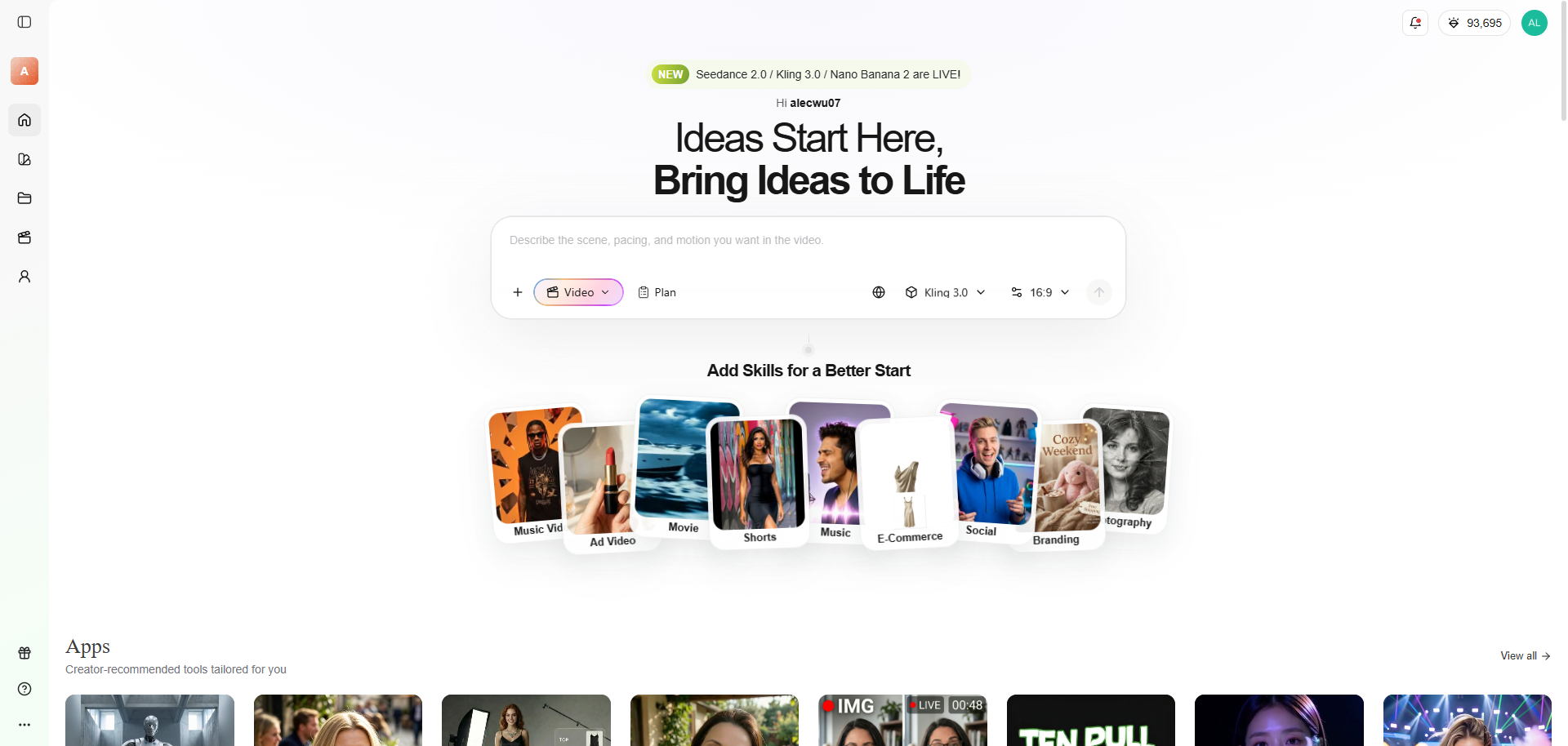
Step 1: Select "Video Agent" and your desired AI video generation model
From the drop-down menu, you need to first select "Video Agent" and then choose your preferred AI video generation model, among options such as Kling, Veo, and Seedance.
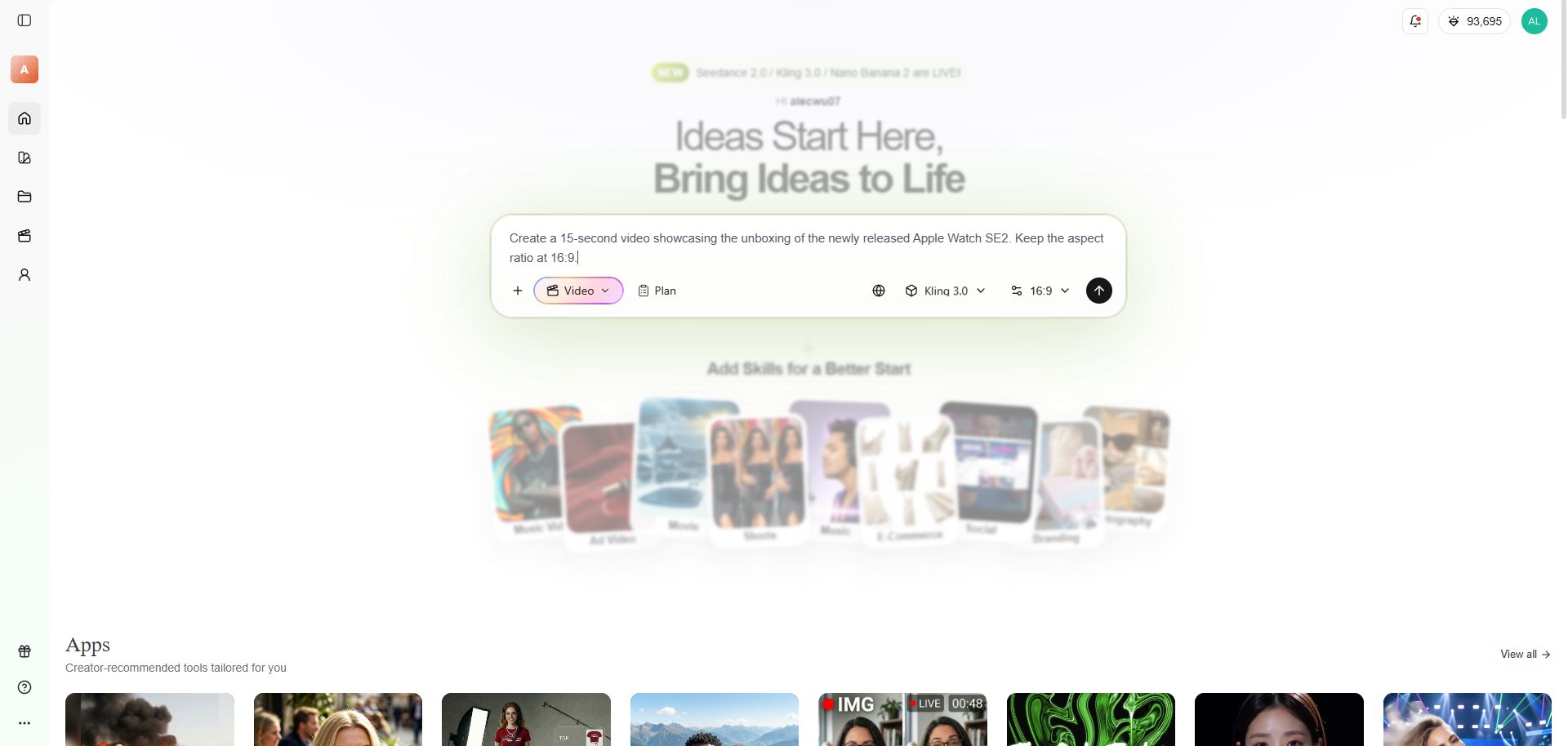
Step 2: Provide prompt to create your marketing video
In the next step, you will need to provide a detailed prompt for the type of marketing video you want to create. Additionally, mention the duration and aspect ratio.
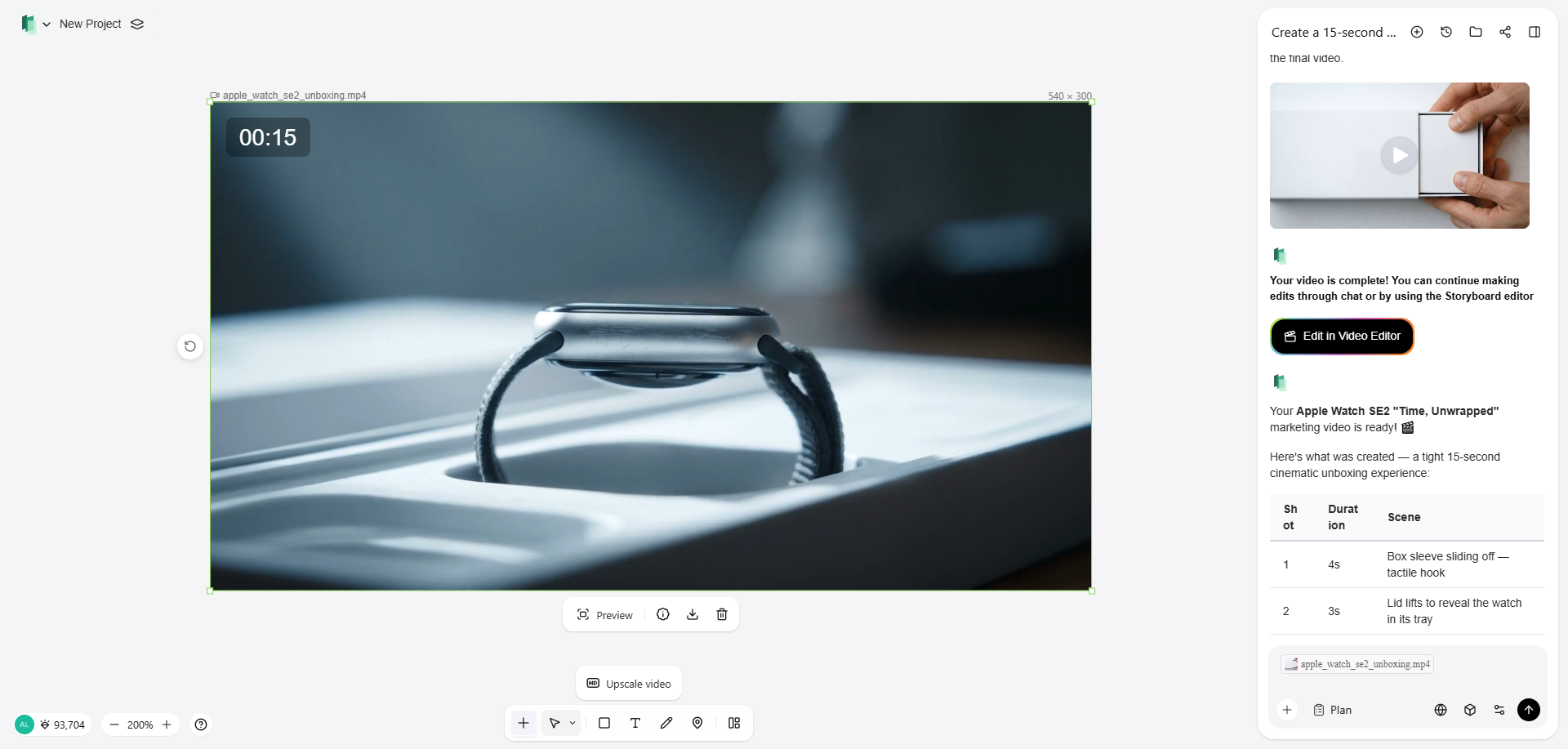
Step 3: Finalize and export the video
Framia Pro will start your video creation process, and once that is done, you will be able to edit it via the in-built video editor, or directly download it for sharing.
Step 6: Distribute, analyze, and optimize
A great video is useless if no one sees it. Publish your video according to your distribution plan. Once it's live, wait a few days, then dive into the analytics. Did viewers drop off at the 10-second mark? Your intro was too slow. Did it get lots of views but no clicks? Your Call to Action (CTA) was weak. Use these metrics to optimize your next video campaign.
Key challenges (and how to overcome them)
Video marketing is highly rewarding, but it is not without its hurdles. Recognizing these challenges early allows you to plan accordingly.
Challenge 1: Budget and production costs
| The Hurdle: High-end cameras, professional lighting, actors, and editing software can be expensive. Many businesses assume they cannot afford video marketing. | The Solution: You do not need a Hollywood budget to succeed. Modern smartphones shoot in stunning 4K. Focus on good lighting (natural light works wonders) and clear audio (invest in a cheap lapel mic). Authenticity often outperforms high production value, especially on platforms like TikTok and Instagram Reels. |
Challenge 2: Standing Out in a Saturated Market
| The Hurdle: With millions of videos uploaded daily, getting your content noticed is harder than ever. | The Solution: Stop trying to appeal to everyone. Niche down. Create hyper-targeted content that solves specific problems for a specific demographic. Focus heavily on crafting irresistible hooks in the first 3 seconds of your video to stop viewers from scrolling. |
Challenge 3: Keeping Up with Platform Algorithms
| The Hurdle: Social media platforms constantly change their algorithms, features, and optimal aspect ratios, leading to unpredictable reach. | The Solution: Stay agile. Diversify your distribution so you aren't reliant on a single platform. Subscribe to social media marketing newsletters to stay updated on trends, but always prioritize timeless storytelling over fleeting algorithmic hacks. |
Top distribution channels for your marketing video content
Knowing where to post your video is just as important as the video itself. Broadly, distribution channels fall into a few categories:
- Your owned channels (website & email)
Your website is the best place to host bottom-of-the-funnel content. Embed explainer videos on your homepage, add product demos to your e-commerce product pages, and include video in your blog posts to boost SEO. Furthermore, adding the word "[VIDEO]" to an email subject line and linking a thumbnail inside the email can drastically increase your click-through rates.
- Video hosting sites (YouTube & Vimeo)
YouTube is the second largest search engine in the world. It is essential for long-term discoverability. If you create educational, how-to, or entertaining long-form content, YouTube should be your primary hub. Vimeo, on the other hand, is excellent for hosting high-quality, ad-free B2B videos meant to be embedded on your professional site.
- Social media platforms (organic & paid)
- TikTok, Instagram Reels, YouTube Shorts: The kings of short-form, vertical video. Best for brand awareness, behind-the-scenes, and trending content.
- LinkedIn: The ultimate B2B channel. Native video uploads (rather than YouTube links) perform exceptionally well for thought leadership and corporate updates.
- Facebook & Meta Ads: Ideal for paid video commercials and highly targeted demographic advertising.

Industry-specific video marketing strategies
Video marketing is not a one-size-fits-all. Different industries require entirely different approaches to resonate with their unique customer bases.
- E-commerce video marketing strategies & retail
For online stores, the biggest hurdle is the inability for customers to physically touch the product. Video bridges this gap.
- Shoppable Videos: Leverage platforms like Instagram and TikTok that allow users to click directly on the video to buy the product.
- Unboxing Videos & UGC: Partner with micro-influencers to create User-Generated Content (UGC). Seeing a real person unbox and reviewing a product builds instant credibility.
- Close-up Product Demos: Show the texture of the fabric, the scale of the bag, or the durability of the tool.
- B2B video marketing strategy & SaaS
B2B purchasing decisions are usually logical, high-stakes, and involve multiple decision-makers.
- Webinars & Masterclasses: Long-form educational content positions your company as an industry thought leader.
- Deep-Dive Case Studies: Interview your most successful clients. Let them explain the ROI they achieved using your software or service.
- Screen-Recording Tutorials: For SaaS companies, clear, step-by-step videos showing exactly how the software interface works are crucial for both sales and customer onboarding.
- Travel video marketing strategies & hospitality
Travel is an inherently emotional and visual industry. You aren't selling a hotel room; you are selling experience and feeling.
- Immersive POV Tours: Use drones or GoPros to give viewers a first-person perspective of hiking a local trail, walking through a luxury resort, or experiencing a local festival.
- Destination Vlogs: Create short, aesthetic mini-vlogs highlighting the "Top 5 things to do in [City]."
- User-Generated Campaigns: Encourage your guests to use a specific hashtag when posting videos of their stay. Repurpose their content (with permission) on your brand's channels.
- Real estate
- Virtual Walkthroughs: Allow potential buyers to experience the flow of a house without leaving their couch.
- Neighborhood Guides: Don't just sell the house; sell the community. Create videos highlighting local schools, parks, and coffee shops.
Crucial suggestions for video marketing success
To ensure your strategy yields maximum results, keep these golden rules in mind:
| Master the 3-second hook | Human attention spans are shorter than ever. If you don't capture a viewer's attention in the first three seconds, they will scroll past. Start with a bold statement, an intriguing question, or a visually striking image. Do not start your videos with a slow, fading 10-second animated logo. |
| Optimize for "sound-off" viewing | Up to 85% of videos on platforms like Facebook and Instagram are watched without sound (often while people are commuting, at work, or in public spaces). Always include subtitles or closed captions. Not only does this retain viewers who can't use audio, but it also makes your content accessible to the hearing-impaired. |
| Craft clickable thumbnails and titles | On platforms like YouTube, your thumbnail and title dictate your success. A thumbnail is a static preview image. It should be high-contrast, feature clear readable text (under 5 words), and preferably include a human face showing emotion. A/B test different titles to see which generates the highest Click-Through Rate. |
| Always include a Call to Action (CTA) | Never leave your viewer wondering what to do next. Whether it is "Subscribe for more," "Click the link in the description," or "Visit our website for 20% off," make your CTA loud, clear, and incredibly easy to follow. |
| Repurpose relentlessly | Do not let your hard work go to waste on a single post. Adopt a "Hero Content" model. Shoot one long-form YouTube video (the Hero). Then, cut that video into three 60-second TikToks, extract the audio for a podcast episode, and use quotes from the transcript to create text-based LinkedIn posts. Multiply your output without multiplying your production costs. |
Signing off
A well-executed video marketing strategy is no longer a luxury for modern brands; it is a fundamental necessity. From boosting your SEO rankings and brand awareness to driving deep customer loyalty and unprecedented sales, the benefits of video are simply too large to ignore.
By defining clear goals, understanding your audience, embracing the right distribution channels, and continually analyzing your performance, you can harness the full power of video. It doesn't matter if you have a massive Hollywood budget or just a smartphone and a great idea—what matters is that you start.
Plan your strategy, hit the record button, and watch your business grow.
Frequently Asked Questions
How often should you update your video content marketing strategy?
You should review and update your video content marketing strategy every quarter to ensure it remains aligned with platform algorithm changes, emerging visual trends, and shifting consumer behavior in the market.
What is the first step in developing a video marketing strategy?
When developing a video marketing strategy, your very first step must always involve defining clear, measurable goals and deeply understanding your target audience's specific needs before filming any actual video content.
How do video marketing strategies for commercials and online content differ?
While video marketing strategies for commercials and online content share goals, commercials usually require higher production budgets for a broad reach, whereas online content prioritizes authentic, engaging storytelling for specific niche audiences.
What are the best video marketing strategies for small businesses in 2026?
The best video marketing strategies for small businesses in 2026 involve leveraging artificial intelligence generation tools, creating authentic short vertical videos, and utilizing user-generated content to build immediate brand trust quickly.
Why is including captions on video marketing strategies important?
Including captions on video marketing strategies is absolutely crucial because most social media users watch content without sound, ensuring your brand message remains highly accessible and completely understandable for every viewer.