Artificial intelligence has moved from a buzzword to a backbone of modern social media strategy. Whether you are a solo creator, a growing startup, or a global brand, AI is already influencing what your audience sees, how content gets recommended, and how quickly your team can respond to trends.
In this guide, we break down what AI in social media actually means, how it is used across marketing, content, and customer engagement — including the risks that come with it — and how tools like Framia Pro are helping teams do more without losing human touch.
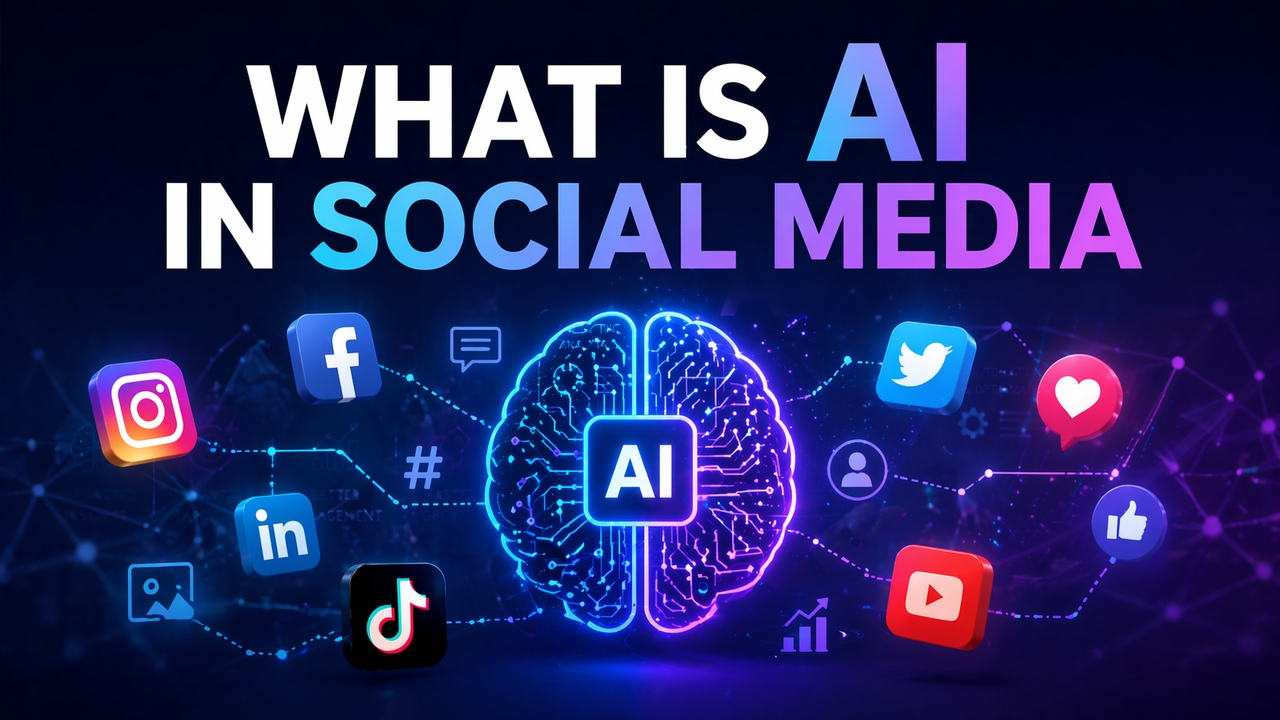
What is AI in social media?
AI in social media refers to the use of artificial intelligence technologies to automate, optimize, and improve social media activities. AI systems analyze large amounts of user data to understand behavior, preferences, and engagement patterns.
Social media platforms use AI to recommend content, detect spam, personalize feeds, and improve advertising performance. Businesses also use AI tools to create captions, generate visuals, monitor trends, and automate customer support interactions.
AI allows brands to make faster decisions based on real-time insights, helping them improve audience engagement and campaign effectiveness.
How is AI used in social media?
The applications of AI in social media marketing span the entire content lifecycle — from ideation and creation all the way to performance analysis and audience response. Here is a closer look at the six most impactful use cases today.
- Content creation and optimization
Generative AI tools can draft captions, suggest hashtags, generate blog-to-post summaries, generate videos, and produce image variations in seconds. Marketers are using these capabilities not to replace creativity, but to scale it. A campaign that once required days of copywriting iteration can now be tested in hours.
Platforms like Framia Pro help creators and marketers produce high-quality AI-generated videos using top-tier models, like Sora 2, Veo 3.1, Seedance 2.0, and media content for social campaigns quickly and efficiently. This reduces production time while helping brands maintain consistent posting schedules.
Research shows that 83% of marketers say generative AI helps them produce significantly more content than they could without it, and 71% report that AI-created content outperforms non-AI content in engagement.
- Personalization and audience targeting
AI analyzes behavioral signals — what users watch, skip, like, share, and search for — to deliver content that feels personally curated. For marketers, this means smarter audience segmentation, better-timed posts, and ad creatives tailored to specific demographics.
Studies confirm that businesses using AI for social media content generation report a 15–25% increase in engagement rates. The logic is simple: when the right content reaches the right person at the right time, it converts.
Framia Pro supports this personalization effort by allowing teams to create multiple visual variants of the same campaign asset. A brand can quickly produce different visuals for different audience segments — without starting from scratch each time. This agile creative workflow is essential for brands running multi-market or multi-demographic campaigns.
- Social listening and sentiment analysis
AI-driven listening tools scan vast volumes of social conversations, organizing them by topic, intent, and sentiment in real time. This helps brands understand how their audience feels about them — and spot a brewing PR issue before it becomes a crisis.
These tools surface patterns that would be impossible to detect manually: a spike in negative sentiment around a product feature, an emerging conversation trend that offers a content opportunity, or a competitor vulnerability worth responding to.
- Automation and scheduling
From scheduling posts at optimal times to auto-generating weekly performance reports, AI removes the manual burden from social media management. This is especially valuable for small teams who need to maintain an active presence across multiple platforms without burning out.
AI-powered scheduling tools analyze historical engagement data to recommend the best times to post for each platform and audience. Some platforms now use AI to automatically adjust distribution based on early performance signals — putting more budget and reach behind content that is already resonating.
- Paid media optimization
AI dramatically improves how social media advertising campaigns are targeted, bid on, and tested. It can identify the highest-performing audience segments, adjust bids in real time based on conversion signals, and accelerate A/B testing across multiple ad formats and placements.
The result is faster learning cycles and more efficient budget allocation — critical for brands where every advertising dollar must be justified.
- Customer engagement and chatbots
Today's customers expect fast responses. Research shows that 76% of social media users expect a reply within 24 hours, and many expect it much sooner. AI-powered chatbots handle routine questions, triage incoming messages by urgency, and route complex issues to human agents.
The key is balance. Chatbots excel at speed and volume; humans excel at nuance and empathy. The best social media teams use AI for triage and humans for trust.
- Influencer marketing optimization
AI helps brands identify the right influencers for their marketing campaigns by analyzing audience demographics, engagement rates, and content performance. Businesses can use AI tools to find influencers who align with their target audience and marketing goals. This improves campaign efficiency and increases the chances of successful brand collaborations.
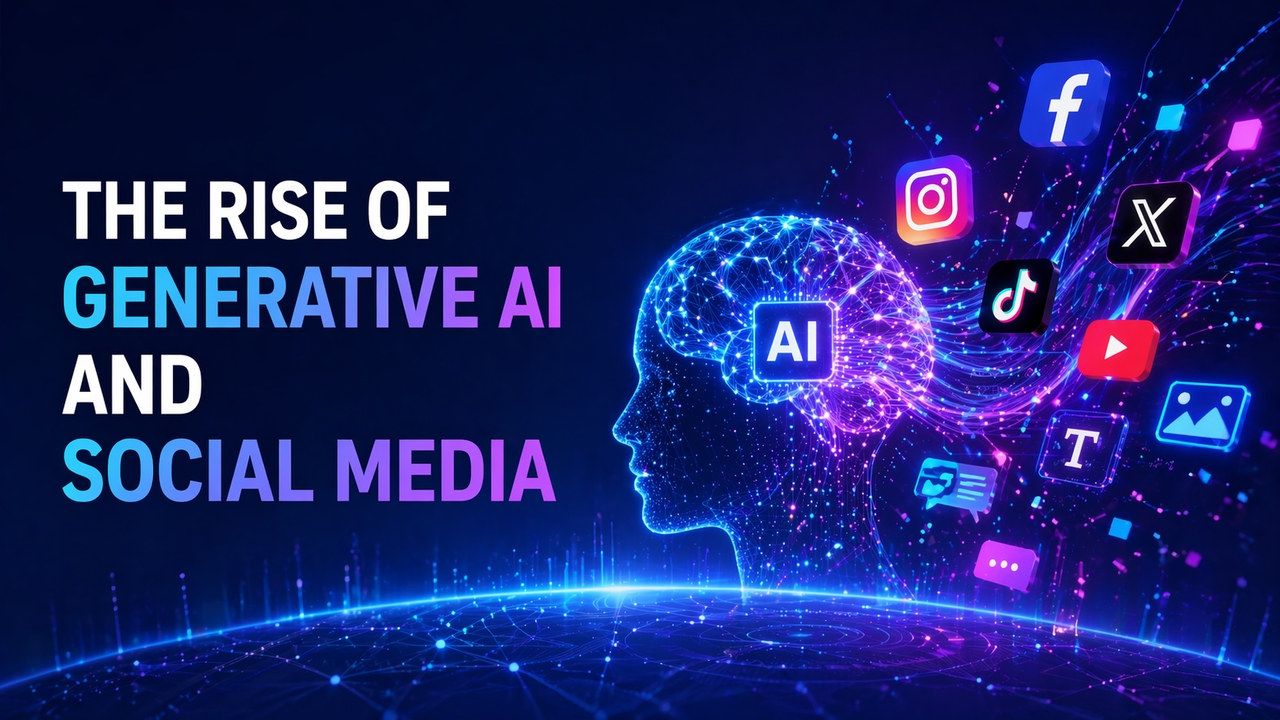
The rise of generative AI and social media
Generative AI — the category of AI that can produce text, images, audio, and video from a prompt — has fundamentally changed the content creation landscape. What used to take a design team and a copywriter now takes a prompt and a few seconds.
The numbers reflect the shift: the global AI in social media market was valued at approximately $2.2 billion in 2024 and is projected to grow to over $10 billion by 2029, at a compound annual growth rate of 36.2%.
For visual content teams, Framia Pro sits at the intersection of generative AI and practical social media workflow. Rather than stitching together multiple tools, Framia Pro provides an integrated environment where teams can generate, edit, resize, and export social-ready visuals — all informed by AI that understands platform specifications, brand guidelines, and content performance patterns.
This matters because generative AI without context can produce polished but off-brand content. Framia Pro's value lies in keeping the AI grounded in your brand identity — ensuring that AI-generated speed does not come at the cost of brand coherence.
AI and automation: Transforming social media management
Beyond content creation, AI is fundamentally transforming how social media operations are managed day to day. Teams that once needed dedicated people for scheduling, monitoring, reporting, and response are now doing more with leaner structures.
Key areas where automation is making the biggest difference include:
- Content scheduling and publishing across multiple platforms from a single dashboard
- Real-time performance alerts that flag underperforming posts or unusual engagement spikes
- Automated reporting that delivers weekly and monthly insights without manual data export
- Comment moderation and spam filtering that keeps feeds clean without constant attention
- Influencer identification, where AI analyzes millions of profiles to surface creators whose audiences best match a brand's target market
The shift toward AI-powered management tools reflects a broader trend: social media has become too complex, too fast-moving, and too data-intensive to manage effectively without intelligent automation.
Framia Pro fits directly into this automated workflow. It is not just a design tool; it is a comprehensive creative agent built for the speed of modern marketing. It consolidates 20+ top-tier models like Nano Banana 2 and Kling 3.0 into a conversational canvas, allowing you to generate 4K cinematic videos and branded designs via simple chat. With specialized Shorts and Ad Agents, it delivers platform-ready assets and perfect character consistency across entire campaigns instantly.
The impact of AI and deepfakes on social media
No honest discussion of AI and social media is complete without addressing the darker side: the use of AI to manipulate, deceive, and distort.
Deepfakes — the AI-generated synthetic media that can make real people appear to say or do things they never did — have become a genuine threat to information integrity on social platforms. Research from RAND Corporation has highlighted how AI-generated disinformation is already being explored as a tool for social manipulation at scale.
The implications for social media are significant. Deepfakes have been used to spread political disinformation, generate fake celebrity endorsements, and create synthetic influencers that blur the line between humans and machines.
For marketers, this creates a trust challenge that extends beyond their own content. Audiences are becoming increasingly skeptical of everything they see online. A 2024 survey found that Americans believe only 41% of online material is accurate and human-generated.
The response from platforms and regulators is accelerating: 82% of people surveyed support laws requiring disclosure of AI-generated content, and major platforms are investing in AI detection and labeling tools. For brands, transparency is not just a legal consideration — it is a competitive one. Brands that clearly signal when and how they use AI will earn more trust in an era of widespread synthetic content.
AI in social media: Pros and cons
Like any powerful technology, AI in social media comes with real advantages and real risks. Understanding both sides is essential for using it responsibly and effectively.
Pros
- Personalization: AI studies user behavior like clicks, likes, and watch time to create highly tailored content feeds. This improves user satisfaction, keeps people engaged longer, and helps platforms deliver more relevant experiences.
- Content moderation: AI systems can scan massive amounts of posts in real time to detect harmful content such as hate speech, violence, or spam. This helps platforms respond faster than humans and maintain safer online communities.
- Automation: AI tools handle repetitive tasks like scheduling posts, replying to common messages, and managing comments. This saves time for creators and businesses, allowing them to focus more on strategy and creativity.
- Data insights: AI analyzes large datasets to uncover patterns in user behavior. Businesses can use these insights to understand their audience better, refine content strategies, and improve engagement and performance.
- Enhanced advertising: AI improves ad targeting by analyzing user preferences, demographics, and behavior. This leads to more effective campaigns, higher conversion rates, and better return on investment for advertisers.
- Trend detection: AI can quickly identify viral content and emerging trends by analyzing large volumes of data. This helps creators and brands stay relevant and adapt quickly to changing audience interests.
Cons
- Privacy concerns: AI relies on collecting large amounts of personal data, including browsing habits and preferences. This raises concerns about data security, unauthorized access, and how companies use or share this sensitive information.
- Algorithm bias: AI systems may unintentionally reflect biases present in their training data. This can lead to unfair content recommendations, reduced visibility for certain groups, or reinforcement of stereotypes.
- Misinformation spread: AI algorithms often prioritize engaging content, which can include misleading or false information. This can amplify fake news quickly, making it difficult for users to distinguish between accurate and unreliable content.
- Reduced human interaction: With AI-generated responses and automated interactions, social media communication can feel less personal. This may weaken genuine human connections and reduce emotional authenticity in conversations.
- Overdependence: Relying heavily on AI tools can reduce creativity and independent thinking. Content creators may depend too much on automated suggestions instead of developing original ideas and unique perspectives.
- Job displacement: AI automation can replace roles such as customer support agents, moderators, and marketing assistants. This creates concerns about job loss and the need for workers to adapt to new skill requirements.
The future of AI and social media
The trajectory is clear: AI will become more deeply embedded in every aspect of social media, from how content is created and distributed to how audiences discover and interact with it.
Looking ahead, several emerging trends will define the next phase of AI in social media marketing:
- Hyper-personalization: AI will deliver content tailored not just to demographic segments, but to individual users in real time
- Predictive analytics: Marketers will increasingly rely on AI to anticipate trends and audience behavior before they emerge
- AI-native creators: Virtual influencers and AI-generated personas will become a more mainstream part of influencer marketing strategies
- Augmented reality integration: AI-powered AR features will transform how brands and consumers interact on visual platforms
- Tighter regulation: Disclosure requirements for AI-generated content will become standard across major markets
Final thoghts
AI and social media are no longer separate conversations. They are the same conversation. Understanding how AI shapes content feeds, drives advertising, enables automation, and introduces new risks is no longer optional for anyone working in marketing or communications.
The opportunity is real: smarter content, faster production, better personalization, and data-driven decisions at every step. So is the responsibility: maintaining transparency, protecting brand voice, and using AI in ways that add genuine value to your audience.
For teams ready to act on that opportunity, Framia Pro offers a practical starting point — an AI-powered visual content platform that makes social media production faster, more consistent, and more impactful without sacrificing the brand identity you have worked to build.
FAQs
- How is AI used in social media marketing?
AI is used in social media marketing for audience targeting, content creation, ad optimization, performance tracking, and automation. It helps brands create personalized campaigns, improve engagement, and make data-driven decisions that increase reach and conversion rates across platforms
- What are examples of AI in social media?
Examples include content recommendation algorithms, AI chatbots, automated ad targeting, sentiment analysis tools, and AI-generated content. Platforms like Instagram, Facebook, and TikTok use AI to personalize feeds and improve user engagement through smart content delivery systems.
- Can AI create social media content?
Yes, AI can create social media content including captions, images, videos, and posts by using generative models. Platforms like Framia Pro help users quickly produce high-quality, platform-ready content, making social media marketing faster, easier, and more efficient.
- Can AI replace human social media managers?
AI cannot fully replace social media managers but can automate repetitive tasks like scheduling, reporting, and basic responses. Human creativity, strategy, and emotional understanding are still essential for building brand identity and meaningful audience connections.
- What are the risks of AI in social media?
Risks include misinformation, deepfakes, data privacy concerns, algorithm bias, and over-automation. AI can spread fake content quickly and reduce human authenticity in communication, making it important for businesses and platforms to use AI responsibly and ethically.