
In today’s digital-first world, social media marketing for small business is no longer optional—it’s essential. Whether you're a local shop, startup, or growing brand, social platforms offer powerful ways to connect with your audience, build trust, and increase sales without a massive budget.
But simply posting occasionally isn’t enough. To truly succeed, small businesses need a clear strategy, consistent content, and the right tools. This guide will walk you through everything—from building a plan to choosing platforms, creating content, and using smart tools to grow faster.
Why social media marketing in small business matters
Social media marketing empowers small businesses to build brand awareness, connect with their audience, and stay competitive in today’s digital world, making a strong strategy essential for success. Here are some reasons why it truly matters:
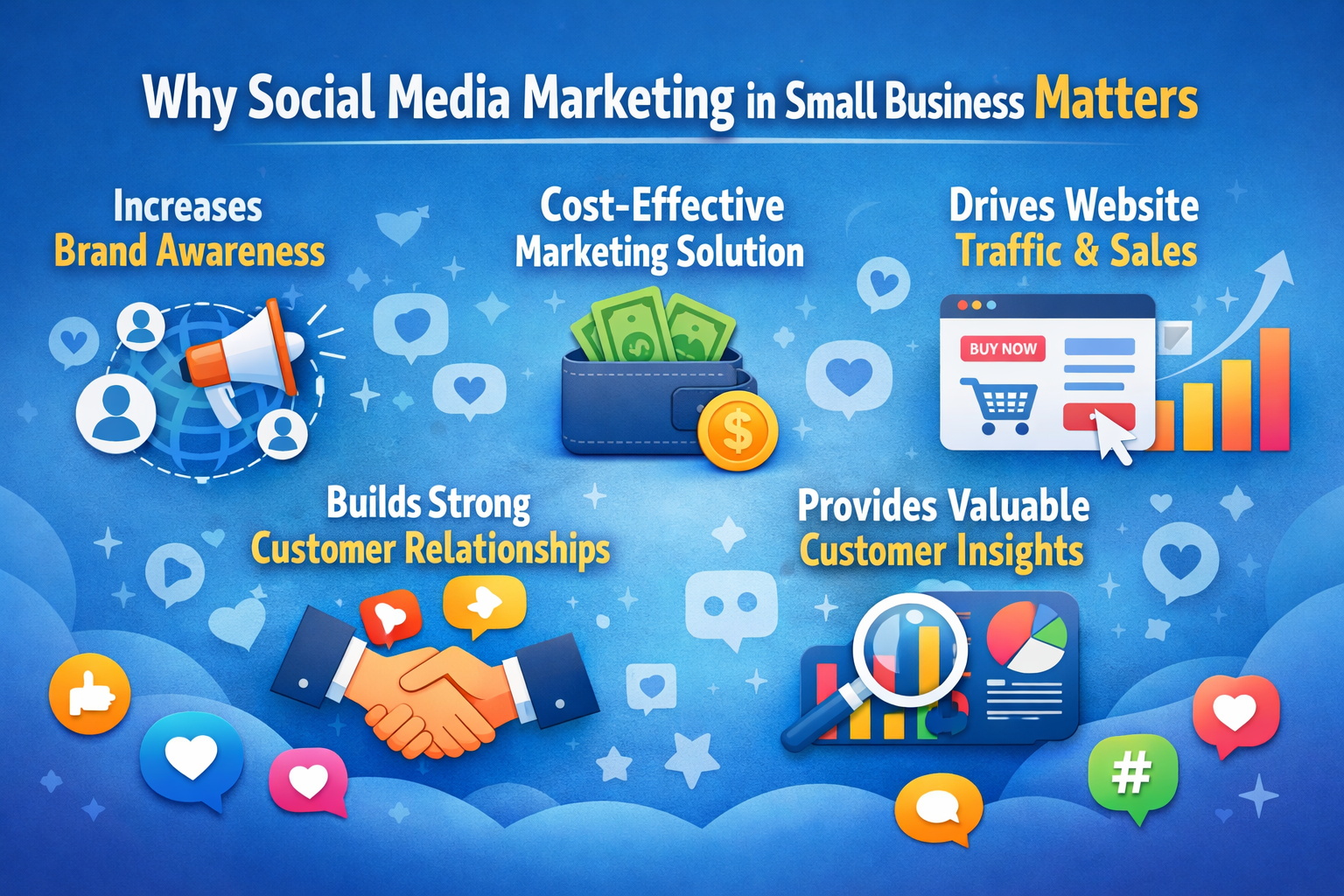
- Increases brand awareness: Social media platforms allow small businesses to reach a wider audience without heavy investment. Consistent posting, engaging visuals, and valuable content help your brand stay visible and memorable, making it easier for potential customers to recognize and trust your business over time.
- Builds strong customer relationships: Unlike traditional marketing, social media enables direct interaction with your audience. Responding to comments, messages, and feedback helps build trust and loyalty, making customers feel valued and more likely to return and recommend your business to others.
- Cost-effective marketing solution: Social media marketing is one of the most affordable ways to promote your business. With minimal budget, small businesses can create organic content or run targeted ads, ensuring better ROI compared to traditional advertising channels like TV or print.
- Drives website traffic and sales: Strategic posts, promotions, and call-to-actions can direct users to your website or online store. By sharing offers, product updates, and useful content, businesses can convert followers into paying customers and increase overall revenue.
- Provides valuable customer insights: Social media platforms offer analytics tools that show audience behavior, preferences, and engagement patterns. These insights help small businesses refine their strategies, create better content, and make data-driven decisions for improved marketing performance.
How to build a social media strategy for small business
Creating a social media marketing strategy for small business success requires a roadmap. This step-by-step framework ensures your efforts remain focused, measurable, and perfectly aligned with your goals.
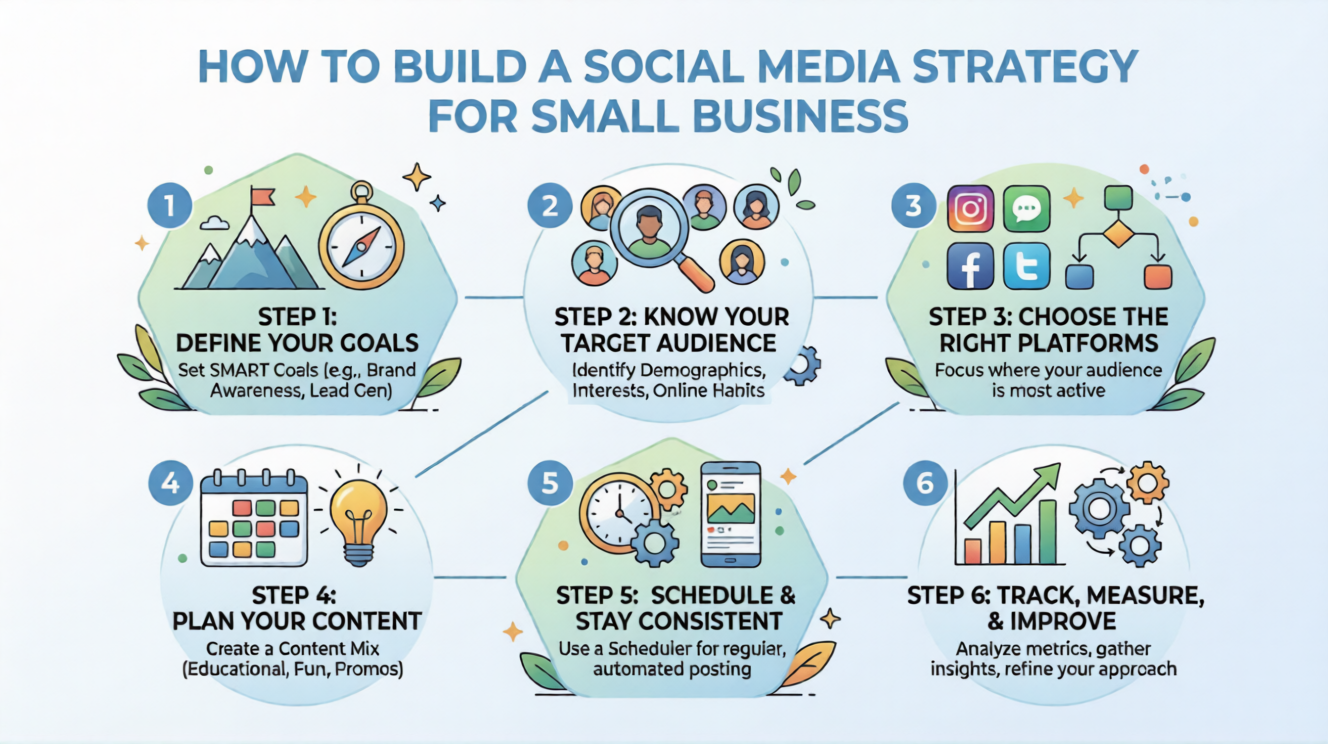
Step 1: Define your goals
Start by defining what you want to achieve with your social media efforts. Whether it’s increasing brand awareness, driving website traffic, generating leads, or boosting sales, having clear goals will guide your entire strategy and help measure success effectively.
Step 2: Know your target audience
Think about who your ideal customer is — their age, interests, challenges, and online habits. The more precisely you understand them, the easier it becomes to create content that genuinely connects. Speak directly to their needs and your social media presence will feel relevant rather than generic.
Step 3: Choose the right platforms
Don't try to be everywhere at once. Focus on two or three platforms where your audience actually spends time. Here's a quick breakdown:
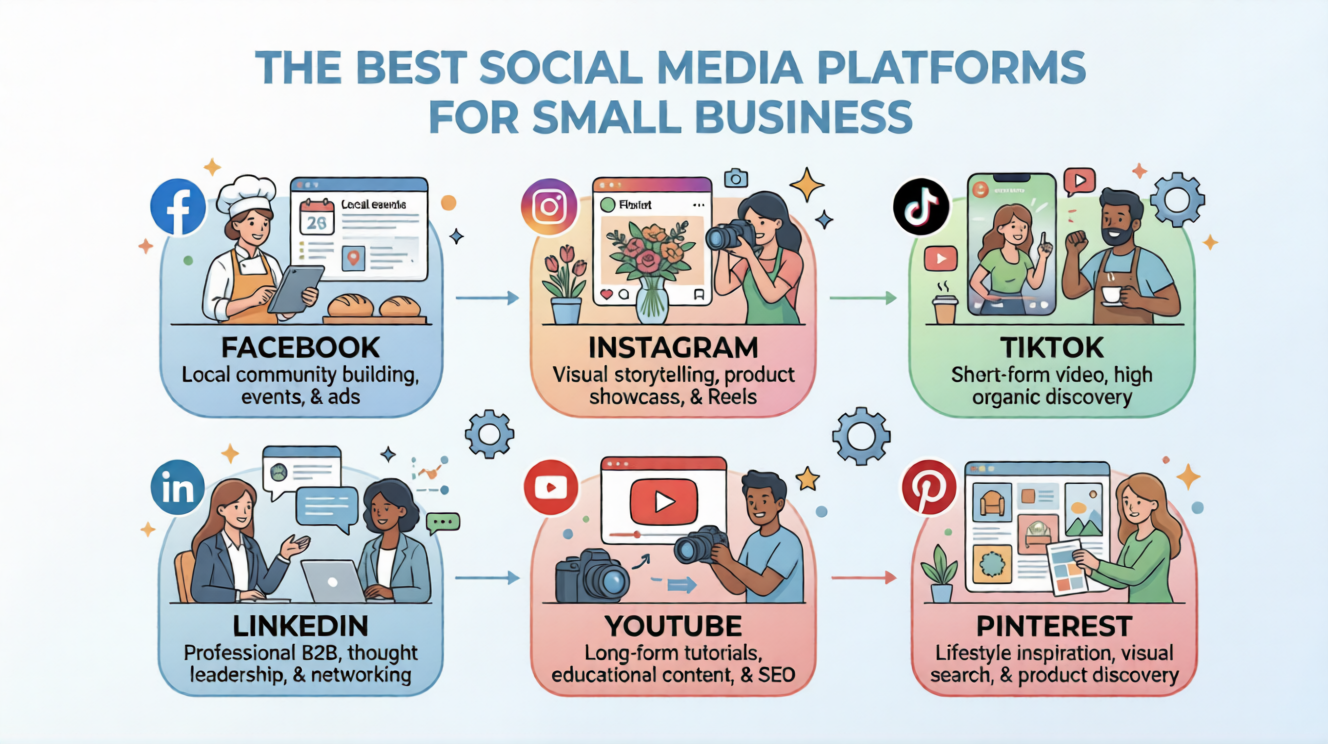
- Facebook: Best for local businesses, community building, and reaching adults 30+. Excellent for events, groups, and paid advertising.
- Instagram: Ideal for visually-driven brands — food, fashion, beauty, interiors, lifestyle. Strong for Stories, Reels, and product showcases.
- LinkedIn: The go-to for B2B companies, professional services, and thought leadership.
- TikTok: Rapidly growing platform with strong organic reach, particularly effective for reaching Gen Z and millennial audiences with short video content.
- YouTube: Best for long-form educational content, tutorials, and brand storytelling.
- Pinterest: Perfect for lifestyle, home décor, food, crafts, and any business where visual inspiration drives purchase decisions.
Step 4: Plan your content
Map out what you'll post each week using a simple content calendar. Mix educational tips, behind-the-scenes glimpses, product highlights, and customer stories. Variety keeps your audience engaged while consistency keeps your brand visible. Planning ahead removes the daily stress of figuring out what to post next.
Step 5: Schedule and stay consistent
Consistency matters more than perfection. Use a social media scheduler to batch-create and queue posts in advance, so your content goes out regularly even on your busiest days. Tools like Framia Pro also help you design on-brand visuals quickly, keeping your feed looking polished without the extra effort.
Step 6: Track, measure, and improve
Review your analytics monthly. Monitor key metrics like engagement, reach, clicks, and conversions. Analyze what works and what doesn’t, then refine your strategy accordingly. Continuous improvement helps maximize results and ensures long-term growth.
Social media marketing tips for small business
Here are the most impactful social media marketing tips for small businesses to help you get real results:
- Optimise your profiles fully
Your profile is your first impression. Use a clear, high-quality logo or photo, write a compelling bio that includes your main keyword and location, add your website URL, and include contact details. An incomplete profile signals an inactive or unprofessional business.
- Use hashtags strategically
Hashtags are searchable keywords that help new audiences discover your content. Research relevant hashtags in your niche and use a mix of broad (e.g., #smallbusiness) and specific tags (e.g., #hyderabadbakery). On Instagram, aim for 5–15 well-chosen hashtags per post rather than flooding the caption.
- Engage, don't just broadcast
Social media is a two-way street. Reply to every comment, answer DMs promptly, and interact with other accounts in your niche. The more you engage, the more algorithms reward your content with greater visibility.
- Leverage user-generated content
Encourage customers to post about your business and share those posts (with credit). User-generated content (UGC) is incredibly persuasive — it's word-of-mouth marketing for the digital age. Run contests, create branded hashtags, and feature customers on your feed.
- Go behind the scenes
People connect with people, not logos. Show the humans behind your business. Share how your products are made, introduce team members, or document a typical day. Authentic content builds trust and emotional connection far more effectively than polished advertising.
- Leverage visuals and video
Posts with strong visuals and video consistently outperform plain text across every platform. Short Reels, TikToks, and eye-catching graphics stop the scroll and drive real engagement. Use tools like, Framia Pro to create professional, on-brand visuals effortlessly — no design skills needed — and watch your content perform like never before.
- Post at the right times
Consistency is key, but timing is the secret sauce. Monitor your analytics to see when your specific audience is most active and schedule your posts to hit their feeds at peak hours.
- Collaborate with micro-influencers
You don't need a celebrity endorsement. Micro-influencers (those with 1,000–50,000 followers) in your niche or local area often have highly engaged, loyal audiences. A well-placed mention or collaboration can introduce your business to thousands of relevant potential customers.
- Run targeted social ads
Once you've established an organic presence, consider investing in paid social advertising. Facebook and Instagram ads, for example, allow you to target by location, age, interests, behaviors, and more — ensuring your budget reaches the most relevant people.
How to use each platform effectively for your small business
Understanding how to use each platform effectively helps you get the most out of your social media strategy for small businesses. Each platform has unique features, so tailoring your approach ensures better engagement and results.
Create a Facebook Business Page and keep it active with a mix of posts, Stories, and video content. Join and participate in relevant local groups to build community trust. Use Facebook Events to promote launches or webinars. With Facebook Ads, you can retarget visitors, build lookalike audiences, and run highly targeted lead generation campaigns.
Instagram is a visual-first platform, so focus on high-quality images and consistent branding. Use Stories daily for quick updates and Reels for maximum organic reach. If you sell products, enable product tagging to create a seamless shopping experience. Instagram Shopping allows users to buy directly within the app.
For B2B small businesses, LinkedIn is indispensable. Share thought leadership articles, case studies, client wins, and industry commentary. Engage with your network through comments and reactions. Linkedin's algorithm rewards consistent, valuable content — showing it to second and third-degree connections who may be your next clients.
TikTok
TikTok's algorithm is uniquely democratic — even brand-new accounts can go viral if the content resonates. Small businesses have found extraordinary success on TikTok by being real, funny, educational, or surprising. Show how your product is made, answer customer FAQs in creative ways, or participate in trending sounds and challenges relevant to your niche.
YouTube
YouTube is the world's second-largest search engine, making it invaluable for small businesses with something to teach or show. Create how-to videos, product demos, customer testimonials, or brand story content. Videos rank in Google search results too — giving your business long-term, compounding visibility that no other platform can match.
Content ideas for social media for small business
Creating engaging content is essential for success on social platforms. The right content ideas for social media for small businesses help attract attention, build trust, and keep your audience consistently engaged.
- Educational posts and tips
Share helpful tips, how-to guides, or industry insights that solve your audience’s problems. This positions your business as an expert and builds trust, making followers more likely to engage and choose your brand when they need your product or service.
- Behind-the-scenes content
Show how your business operates, your team, or your daily processes. This humanizes your brand and helps build a stronger emotional connection with your audience, making your business more relatable and authentic.
- Customer testimonials and reviews
Highlight positive feedback from satisfied customers. Sharing real experiences builds credibility and trust, encouraging potential customers to choose your business based on proven results and social proof.
- Product or service demonstrations
Show how your product works or the results it delivers. Demo videos or before-and-after posts help customers understand the value of your offerings and make informed purchasing decisions.
- User-generated content (UGC)
Encourage customers to share photos or videos using your products. Reposting this content builds community, increases engagement, and acts as authentic promotion from real users.
- Seasonal and trending posts
Create content around festivals, events, or trending topics relevant to your audience. This keeps your brand timely and increases visibility by tapping into what people are already searching for.
- Polls, quizzes, and interactive content
Engage your audience with questions, polls, or quizzes. Interactive content boosts engagement, provides insights into customer preferences, and makes your audience feel involved with your brand.
Common mistakes to avoid in social media marketing
Avoiding common mistakes in social media marketing helps small businesses save time, improve engagement, and achieve better results. Being aware of these pitfalls ensures your efforts stay effective and goal-oriented.
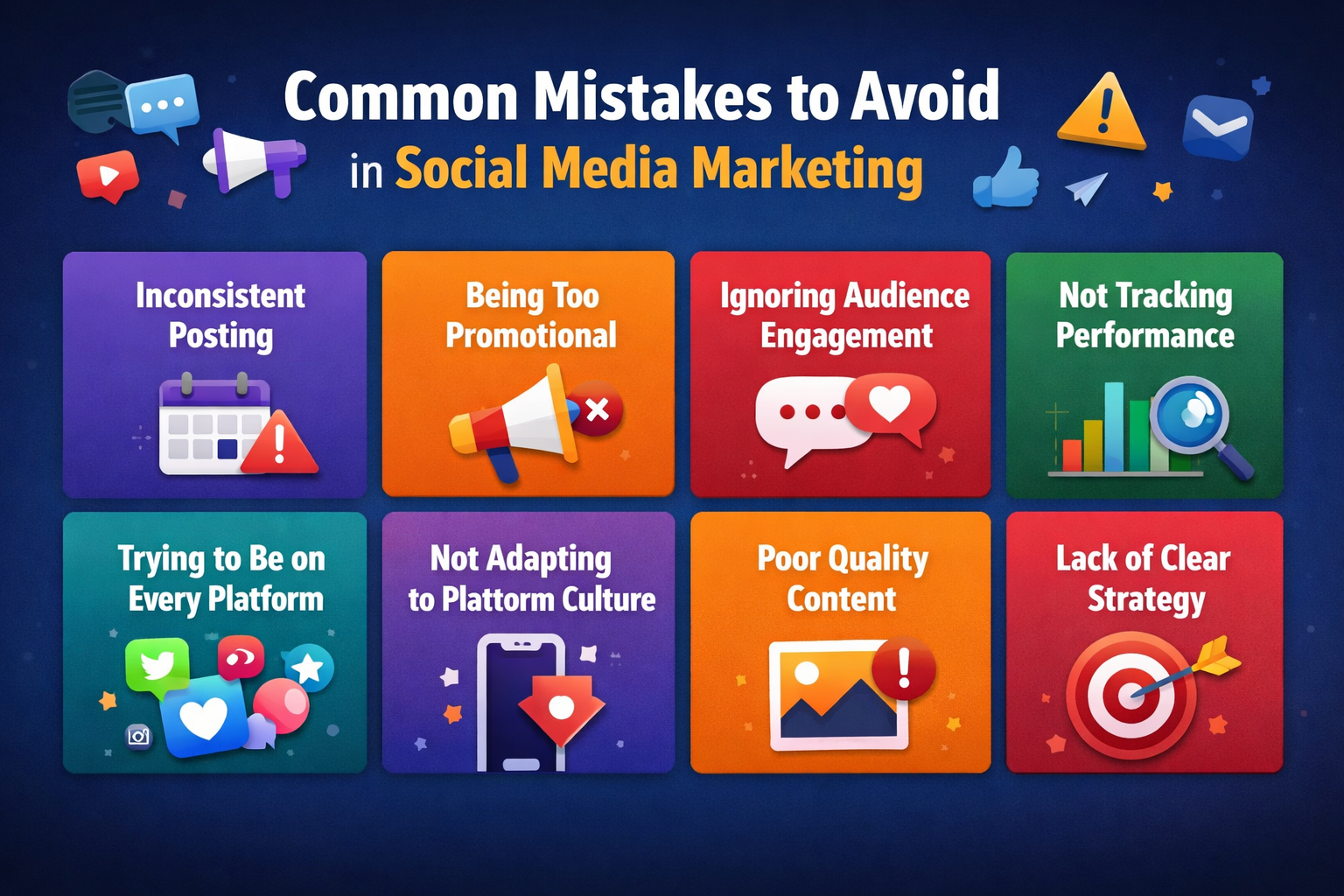
- Inconsistent posting
Posting irregularly can make your audience lose interest and forget about your brand. Consistency builds trust and visibility, so it’s important to follow a schedule and stay active on your chosen platforms.
- Being too promotional
Constantly pushing products or services can turn your audience away. Focus on providing value through helpful, entertaining, or informative content, and keep promotional posts balanced within your overall strategy.
- Ignoring audience engagement
Not responding to comments, messages, or feedback can harm your brand image. Engaging with your audience builds relationships, improves trust, and encourages more interaction with your content.
- Not tracking performance
Skipping analytics means you won’t know what works and what doesn’t. Monitoring metrics like engagement, reach, and clicks helps you refine your strategy and make better decisions over time.
- Trying to be on every platform
Spreading your efforts across too many platforms can reduce quality and consistency. It’s better to focus on a few platforms where your audience is active and build a strong presence there.
- Not adapting to platform culture
Each platform has its own norms, formats, and audience expectations. Posting identical content everywhere without adaptation tends to underperform.
- Poor quality content
Low-quality visuals, unclear messaging, or rushed posts can damage your brand image. Investing time in creating high-quality, clear, and engaging content makes a big difference in performance.
- Lack of clear strategy
Posting without a plan leads to inconsistent messaging and weak results. A clear strategy helps align your content, goals, and audience, ensuring your social media efforts are purposeful and effective.
Elevate your social media content and engage your audience
Creating scroll-stopping video and image content is one of the hardest parts of social media marketing for small businesses. Framia Pro is an AI-powered creative platform built for exactly this — it acts as an all-in-one creative agent, connecting world-class 20+ AI models (Gemini, Seedance, Nano Banana, Sora, and more) to help you produce character-consistent videos, high-quality images, and branded social content from a single canvas. Whether you need a short-form ad, a product visual, or a social media reel, Framia Pro handles heavy creative lifting — so you get professional-grade content without a production team or design budget.
How to measure social media marketing success
Measuring performance is essential to understand whether your social media marketing for small businesses is delivering results. Tracking the right metrics helps you refine your strategy, improve content, and maximize ROI.
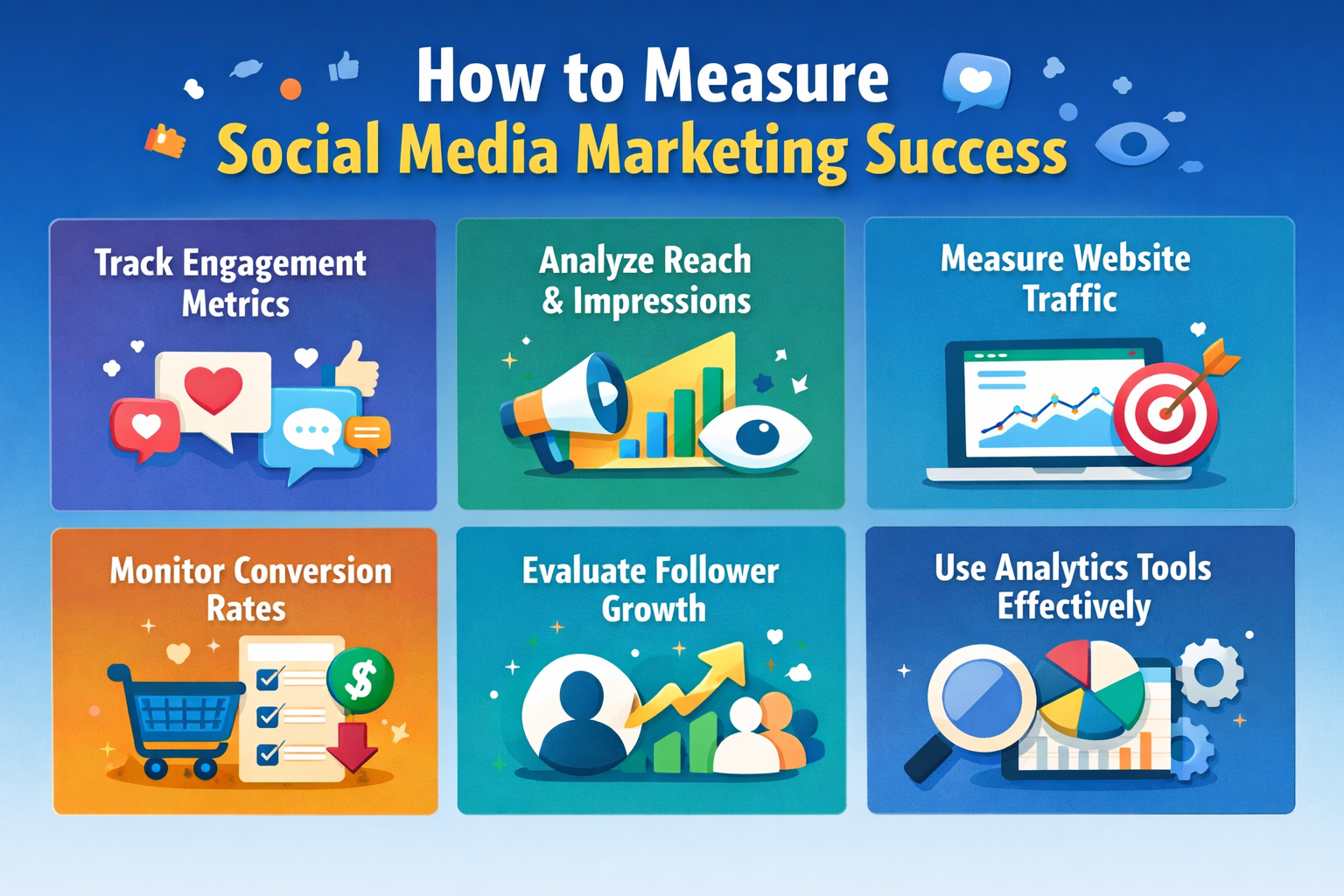
- Track engagement metrics
Monitor likes, comments, shares, and saves to understand how your audience interacts with your content. High engagement indicates your content resonates well, while low engagement signals the need for improvement in content quality or relevance.
- Analyze reach and impressions
Reach shows how many unique users see your content, while impressions indicate total views. These metrics help you understand your visibility and how effectively your content is being distributed across platforms.
- Measure website traffic
Use tools like Google Analytics to track how much traffic comes from your social media channels. This helps you understand which platforms and posts are driving users to your website or landing pages.
- Monitor conversion rates
Track how many users take desired actions, such as making a purchase, signing up, or filling out a form. Conversion rates show the real impact of your social media marketing efforts on business growth.
- Evaluate follower growth
Consistent growth in followers indicates your brand is attracting new audiences. Sudden spikes or drops can provide insights into what type of content is working or not.
- Use analytics tools effectively
Leverage built-in platform insights or third-party tools to gather detailed data. Regular analysis helps you identify trends, optimize campaigns, and make data-driven decisions for better performance.
Conclusion
Social media marketing for small business is one of the most powerful ways to build brand awareness, connect with your audience, and drive consistent growth. With the right strategy, engaging content, and smart use of tools, even small businesses can achieve big results. The key is to stay consistent, focus on providing value, and continuously adapt based on performance insights and trends. By applying the strategies and tips shared in this guide, you can turn your social media presence into a strong driver of long-term success.
FAQs
- What is social media marketing for small businesses?
Social media marketing for small businesses involves using platforms like Facebook, Instagram, and LinkedIn to promote products or services, engage with customers, and build brand awareness in a cost-effective and targeted way.
- How often should I post on social media?
Consistency is more important than high frequency. Aim for 3–5 quality posts per week. It’s better to maintain a steady schedule than post daily and go inactive later. You can leverage Framia Pro to create high-quality content quickly and stay consistent.
- What type of content works best on social media?
Content that educates, entertains, or solves problems performs best. This includes tutorials, behind-the-scenes posts, customer testimonials, short videos, and interactive content that encourages engagement.
- Which is the best social media scheduler for small businesses?
There's no single "best" tool, but popular options include Buffer, Hootsuite, Later, and SocialBee. The right choice depends on your needs—simplicity, analytics, or automation. Small businesses should prioritize ease of use, affordability, and multi-platform support.
- How long does it take to see results from social media marketing?
Paid ads show signals in 2–4 weeks, but organic growth typically takes 3–6 months for measurable results. Consistency and high-quality content are the biggest factors in shortening this timeline and establishing your brand's authority.