
Artificial intelligence is no longer a futuristic concept—it's a core driver of modern business success. With 78% of companies using AI in at least one function as of recent 2025-2026 data, adoption has surged dramatically. Today, businesses of all sizes are adopting AI-powered tools to improve efficiency, automate repetitive tasks, enhance customer experience, and make data-driven decisions. From marketing automation and customer support chatbots to predictive analytics and workflow optimization, AI is reshaping how modern companies operate.
The growing adoption of AI in company operations is driven by the need for faster operations, reduced costs, and smarter decision-making. Companies across industries are discovering new ways to use artificial intelligence to streamline internal processes while delivering more personalized services to customers.
In this article, we explore benefits of AI in business, how businesses are using AI, implementation tips, and how creative platforms like Framia Pro help companies streamline content creation and marketing.
What is artificial intelligence in business?
Artificial intelligence in business refers to the use of machine learning, automation, natural language processing, and data analytics technologies to improve business operations and decision-making.
AI systems can analyze large volumes of data, recognize patterns, automate tasks, and provide insights that help businesses work more efficiently. These technologies are used in departments such as marketing, sales, finance, customer support, human resources, logistics, and operations.
Businesses use AI to:
- Automate repetitive tasks
- Improve customer service
- Analyze customer behavior
- Predict market trends
- Optimize workflows
- Detect fraud and security threats
- Improve employee productivity
- Personalize marketing campaigns
As AI technology continues to evolve, its role in business operations becomes more valuable and accessible.
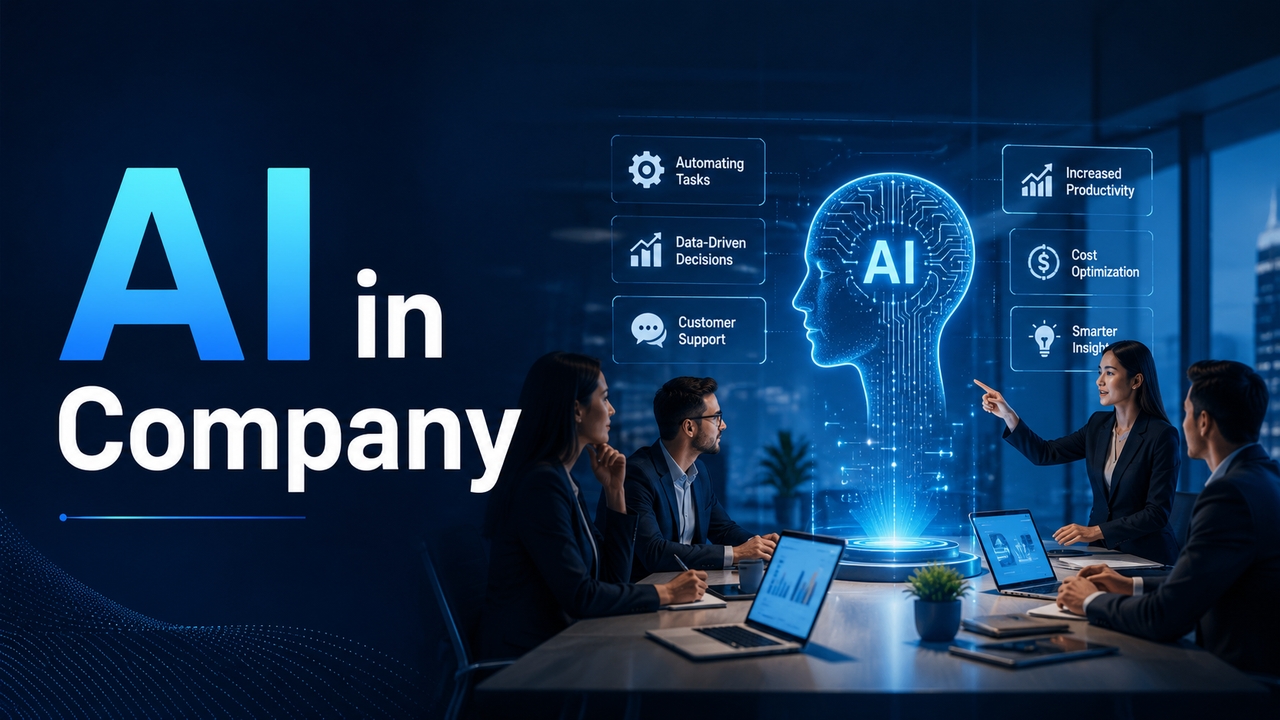
Key benefits of AI in business
The benefits of AI for business go far beyond automation. AI technologies help companies improve productivity, reduce costs, and create better customer experiences.
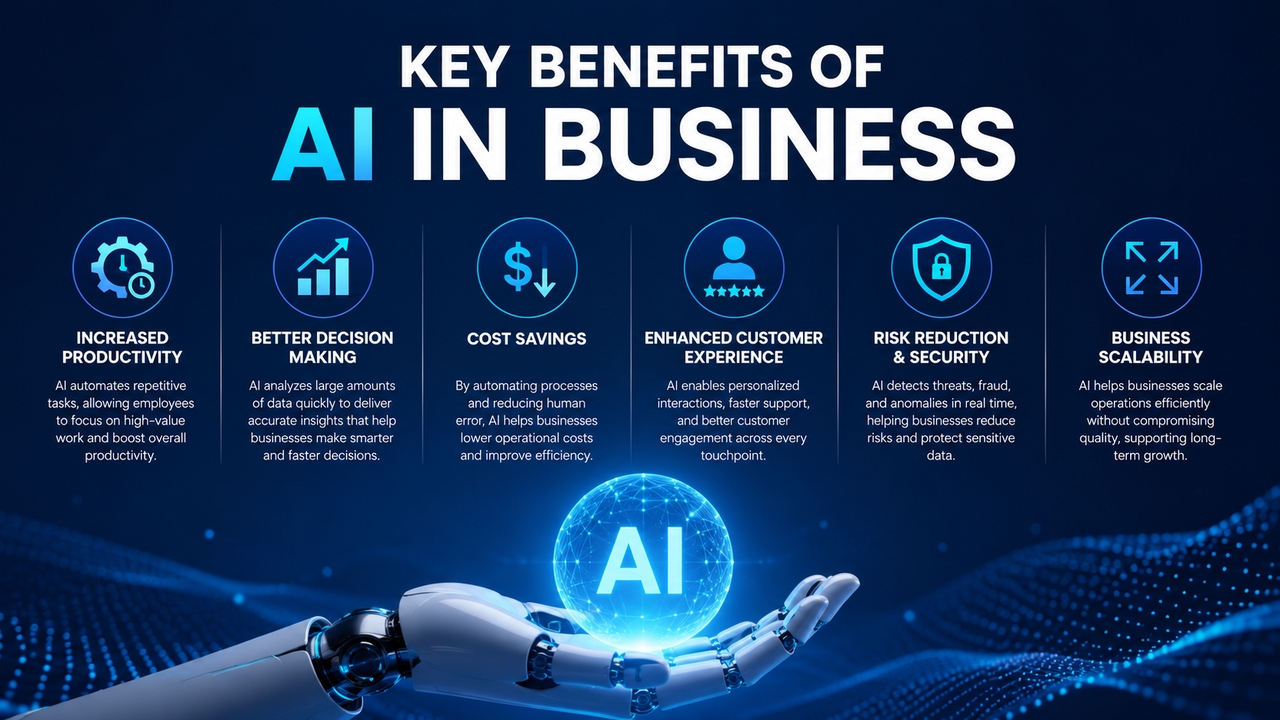
Increased efficiency
AI automates repetitive and time-consuming tasks, allowing employees to focus on higher-value work.
Examples include:
- Data entry automation
- Automated reporting
- Workflow management
- Customer support automation
This increases operational efficiency and reduces human error.
Better decision-making
AI analyzes large datasets quickly and provides actionable insights.
Businesses can use AI-driven analytics to:
- Predict customer behavior
- Identify market trends
- Optimize business strategies
- Improve financial planning
Faster access to insights leads to more informed decisions.
Cost reduction
AI helps reduce operational expenses by automating processes and improving resource allocation.
Businesses save money through:
- Reduced labor costs
- Fewer manual errors
- Improved operational efficiency
- Better inventory management
Over time, AI investments can deliver strong returns.
Improved customer experience
AI enables businesses to deliver personalized customer interactions.
Examples include:
- Personalized recommendations
- Instant customer support
- Faster issue resolution
- Customized marketing campaigns
Better customer experience increases loyalty and retention.
Competitive advantage
Companies that adopt AI technologies early often gain a competitive edge.
AI helps businesses:
- Respond faster to market changes
- Improve innovation
- Increase productivity
- Deliver better services
Organizations using AI effectively can outperform competitors in rapidly changing markets.
How businesses are using AI in 2026
AI in company operations spans multiple functions. Here are prominent real-world applications:
- Customer service & support automation
AI-powered chatbots, virtual assistants, and intelligent routing systems handle thousands of customer inquiries 24/7. Advanced AI agents understand context, sentiment, and intent, resolving simple issues instantly while escalating complex ones to humans with full conversation history. Companies like Sephora and Bank of America use AI to deliver personalized support, significantly reducing response times and increasing customer satisfaction scores. This application cuts operational costs by up to 30% while improving response quality and availability.
- Marketing and content creation
Marketing teams have become some of the heaviest users of AI. From drafting ad copy to generating social media posts, AI tools speed up content production dramatically. According to recent data, 42% of all businesses have already adopted generative AI for content creation, customer engagement, and automation.
This is exactly where tools like Framia Pro come in. Framia is an AI-powered creative platform built for solo creators and small businesses. It connects world-class models — including Google Gemini, Seedream 5.0, Sora 2, and Veo 3.1 — on a single canvas, enabling character-consistent video generation, high-fidelity image design, and branded ad creation. If you're a business producing visual content at scale, Framia eliminates the need for an entire creative team.
- Sales optimization & lead scoring
AI evaluates thousands of data points to identify high-quality leads, predict buying intent, and recommend the best next actions for sales teams. Tools like Salesforce Einstein analyze email patterns, website behavior, and social signals to prioritize prospects. Companies report 20-30% increases in conversion rates and shorter sales cycles thanks to AI-driven insights and automated follow-up sequences.
- Fraud detection & risk management
Financial institutions and e-commerce platforms use AI to detect fraudulent transactions in real-time by identifying unusual patterns and behaviors. AI systems continuously learn from new threats, making them far more effective than traditional rule-based methods. Mastercard and PayPal leverage AI to prevent millions in losses annually while reducing false positives that frustrate legitimate customers.
- Human resources & talent management
AI streamlines recruitment by screening resumes, matching candidates to roles, and even conducting initial video interviews. It also analyzes employee engagement, predicts turnover risk, and personalizes learning & development programs. Companies like Unilever and IBM have transformed their hiring processes, reducing time-to-hire by over 50% while improving workforce diversity and retention rates.
- Operations & supply chain optimization
AI optimizes entire supply chains through route planning, warehouse automation, predictive maintenance, and real-time logistics tracking. Companies like Maersk and DHL use AI to reduce delivery delays, lower fuel consumption, and maintain optimal inventory levels. This results in significant cost savings, improved sustainability, and higher operational resilience against disruptions.
How to start using AI in business
Getting started with AI doesn't require a massive budget or a dedicated data science team. Here's a practical approach:
- Identify pain points
Begin by analyzing your current operations to find high-impact, low-complexity areas. Focus on repetitive tasks that consume significant time and resources, such as content creation, customer support, data entry, or social media management. Targeting these areas delivers quick wins and visible results.
- Choose the right tools
Select tools that match your specific needs. Combine general-purpose AI platforms like ChatGPT or Claude with specialized solutions. For creative work, use Framia Pro — an all-in-one creative AI platform that excels at generating videos, images, and marketing assets efficiently.
- Focus on integration
Ensure the AI tools you choose integrate smoothly with your existing systems and workflows. Seamless integration prevents disruption, reduces employee resistance, and maximizes adoption. Test compatibility with your CRM, project management tools, and content systems before full implementation.
- Address ethics & skills
Train your team on how to use AI effectively and responsibly. Establish clear guidelines for ethical AI usage, data privacy, and transparency. Address employee concerns, provide proper training, and create a culture that embraces AI as a helpful collaborator, not a replacement.
- Measure ROI
Track clear metrics to evaluate success. Monitor time saved, cost reduction, engagement rates, lead conversion, and revenue impact. Regular measurement helps you understand ROI, identify areas for improvement, and justify further investment in AI initiatives.
Real-world examples of AI use in business
Here are five inspiring success stories that demonstrate the tangible impact of AI in business across different industries in 2026:
- Starbucks – Hyper-personalized customer experiences
Starbucks uses its proprietary AI engine Deep Brew to analyze customer data, preferences, purchase history, and even local weather. The system delivers personalized recommendations and promotions through its mobile app. This AI-driven personalization has significantly boosted mobile order sales and customer loyalty, contributing to hundreds of millions in additional revenue while transforming generic offers into highly relevant experiences.

- Duolingo – Accelerating product development
The language-learning platform integrated GitHub Copilot to support its engineering team. By automating repetitive coding tasks and providing real-time suggestions, Duolingo scaled its complex microservice architecture more efficiently. The AI tool acted as a powerful “force multiplier,” enabling faster feature development and helping the company maintain its competitive edge with a lean development team.
- Sephora – Virtual try-on and personalized beauty advice
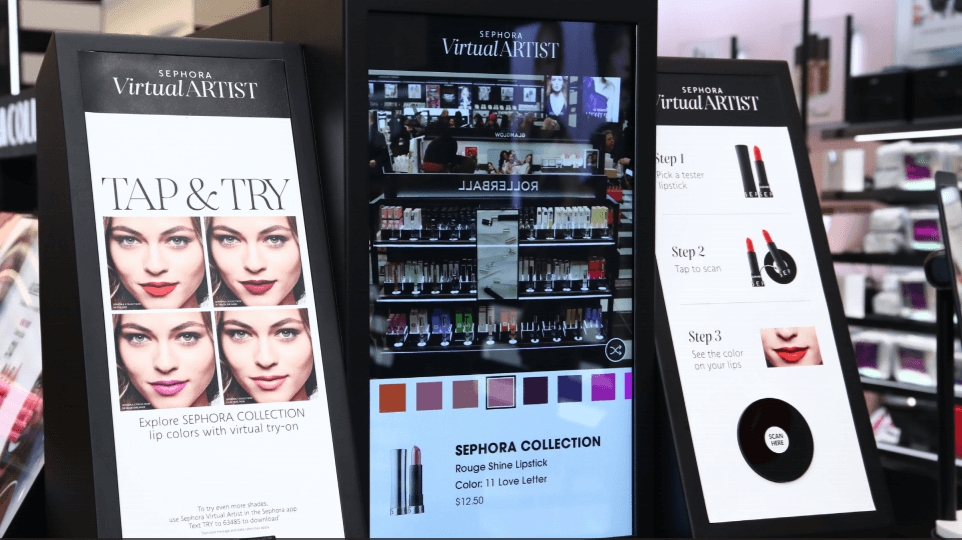
Sephora’s Virtual Artist tool uses AI for augmented reality makeup try-ons and personalized product recommendations. Customers can virtually test thousands of shades and receive tailored beauty advice. This application has dramatically improved online engagement, reduced return rates, and increased conversion rates by making digital shopping more interactive and confident.
- Amazon – Predictive analytics and recommendation engines
Amazon continues to set the standard with AI-powered product recommendations and demand forecasting. By analyzing browsing habits, purchase history, and real-time behavior, the company delivers highly relevant suggestions that drive a massive portion of its sales. AI also optimizes inventory management, helping Amazon reduce stockouts and overstock costs significantly.

Challenges of using AI for business
While AI offers significant advantages for modern companies, implementing AI solutions also comes with challenges. Businesses must carefully plan adoption strategies to avoid operational, technical, and financial issues during implementation.
- High implementation costs: Some AI tools require investments in software, infrastructure, training, and system integration, which can be challenging for smaller businesses with limited budgets.
- Data privacy concerns: AI systems handle large amounts of customer and company data, making strong security measures and compliance with privacy regulations essential.
- Integration complexity: Connecting AI tools with existing business systems and workflows can be technically difficult and may require additional resources and time.
- Lack of AI expertise: Many businesses struggle with limited knowledge and experience in AI, making employee training and proper implementation more challenging.
- Employee resistance to change: Teams may feel uncertain about adopting AI technologies, especially when automation changes existing workflows and responsibilities.
- Dependence on data quality: AI systems rely on accurate and organized data. Poor-quality data can reduce performance and lead to unreliable business insights.
Conclusion
In 2026, embracing AI in company operations is no longer a luxury — it’s a necessity for staying competitive. From boosting efficiency and cutting costs to driving innovation and delivering exceptional customer experiences, artificial intelligence has become a powerful strategic partner for businesses of all sizes.
While challenges exist, companies that start small, choose the right tools, and focus on measurable results will reap significant rewards. Platforms like Framia Pro make it easier than ever to integrate creative AI into daily workflows, helping your company generate high-quality content faster and smarter.
The future belongs to businesses that actively adopt AI in companies today. Start your AI journey now and position your organization for long-term growth and success.
FAQs
- How is AI used in business today?
Businesses use AI for customer service chatbots, content creation, supply chain optimization, fraud detection, recruitment, and predictive analytics. Three out of four companies now use AI regularly for at least one core business function.
- What industries benefit most from AI?
Retail, finance, healthcare, manufacturing, marketing, and logistics benefit greatly from AI. However, almost every industry can gain advantages through automation, personalization, predictive insights, and improved operational efficiency.
- Will AI replace human workers in business?
AI transforms jobs rather than eliminating them entirely. It handles repetitive tasks, freeing employees to focus on creative, strategic, and interpersonal work. Research shows 83% of workers believe AI will enhance human creativity rather than replace it.
- Is AI safe and secure for business use?
AI can be safe when proper security measures, data privacy policies, and compliance (like GDPR) are followed. Businesses should choose trusted platforms, implement access controls, and regularly review AI systems to minimize risks and biases.
- Can small businesses benefit from AI?
Absolutely. AI tools are no longer limited to large enterprises. Today, 98% of small businesses use at least one AI tool. Platforms like Framia Pro let solo creators and small teams produce professional-quality creative content without a large team or budget.