
Think about the last brand that stopped you mid-scroll. Maybe it was a color palette that felt instantly familiar, a tagline that stuck in your head, or a logo you recognized before you read a single word. That instant recognition? That's brand identity doing its job.
In a crowded marketplace, a strong brand identity is one of your most powerful competitive advantages. It shapes how people perceive your business, builds trust with your audience, and turns casual buyers into loyal advocates. Whether you're building a brand from scratch or refreshing an existing one, understanding brand identity — and how to create it — is essential.
This guide covers everything: what brand identity means, what it includes, how to build it step by step, best practices, and real examples to inspire your own.
What is brand identity?
Brand identity refers to the collection of visual, verbal, and strategic elements that represent a brand and shape how it is perceived by audiences. It includes components such as the logo, color palette, typography, imagery, and brand voice that together create a recognizable and consistent presence. While branding focuses on the overall perception of a company, brand identity is the tangible expression of that perception. A well-defined brand identity helps businesses communicate their values, personality, and purpose clearly. By maintaining consistency across all platforms and interactions, companies can build recognition, strengthen customer trust, and create lasting connections with their target audience.
Why brand identity matters to your business
- Build brand recognition: A consistent brand identity makes it easier for customers to recognize and remember your business across different platforms, from websites and social media to packaging and advertisements.
- Establish trust and credibility: Professional and consistent branding signals reliability and quality. When customers see a well-designed brand identity, they are more likely to trust the business and feel confident in its products or services.
- Differentiate from competitors: In competitive markets, a strong brand identity helps businesses stand out. Unique visuals, messaging, and personality make it easier for customers to distinguish your brand from others.
- Create emotional connections: A well-developed brand identity communicates values and personality, helping customers connect with the brand on an emotional level and build long-term loyalty.
- Strengthen marketing effectiveness: Consistent branding across marketing channels improves the impact of campaigns and makes messaging more memorable and cohesive.
The core elements of brand visual identity
A comprehensive brand identity combines visual identity and verbal identity to tell a cohesive story. Here are the core elements:

- Logo: A logo is the primary visual symbol of a brand and one of the most recognizable elements of brand identity. It represents the company’s personality, values, and purpose in a simple graphic form that customers can easily remember.
- Color palette: A brand's color palette consists of the specific colors used across all visual materials. Colors influence emotions and perception, helping communicate the brand’s personality while ensuring consistency in websites, marketing materials, and packaging.
- Typography: Typography refers to the fonts and text styles a brand uses in its communication. Consistent typography strengthens brand recognition and reflects the brand’s personality, whether it appears modern, elegant, professional, or playful.
- Imagery and photography: Imagery and photography include the style of visuals a brand uses, such as photos, illustrations, icons, or graphics. These visuals help convey the brand’s story, evoke emotions, and create a consistent visual experience across platforms.
- Brand voice and tone: Brand voice and tone define how a brand communicates with its audience through written and spoken content. A clear and consistent voice helps build personality and trust while ensuring messaging feels recognizable and aligned with brand values.
- Tagline: A brief, memorable phrase that encapsulates your brand’s mission or value proposition. It provides immediate context to your visual elements, sticking in the consumer's mind and summarizing what they can expect from your brand. Think of Nike's "Just Do It" or Apple's "Think Different"
How to establish a brand identity: Step-by-step guide
Creating a brand identity requires strategic planning and consistency. Below is a step-by-step approach businesses can follow.
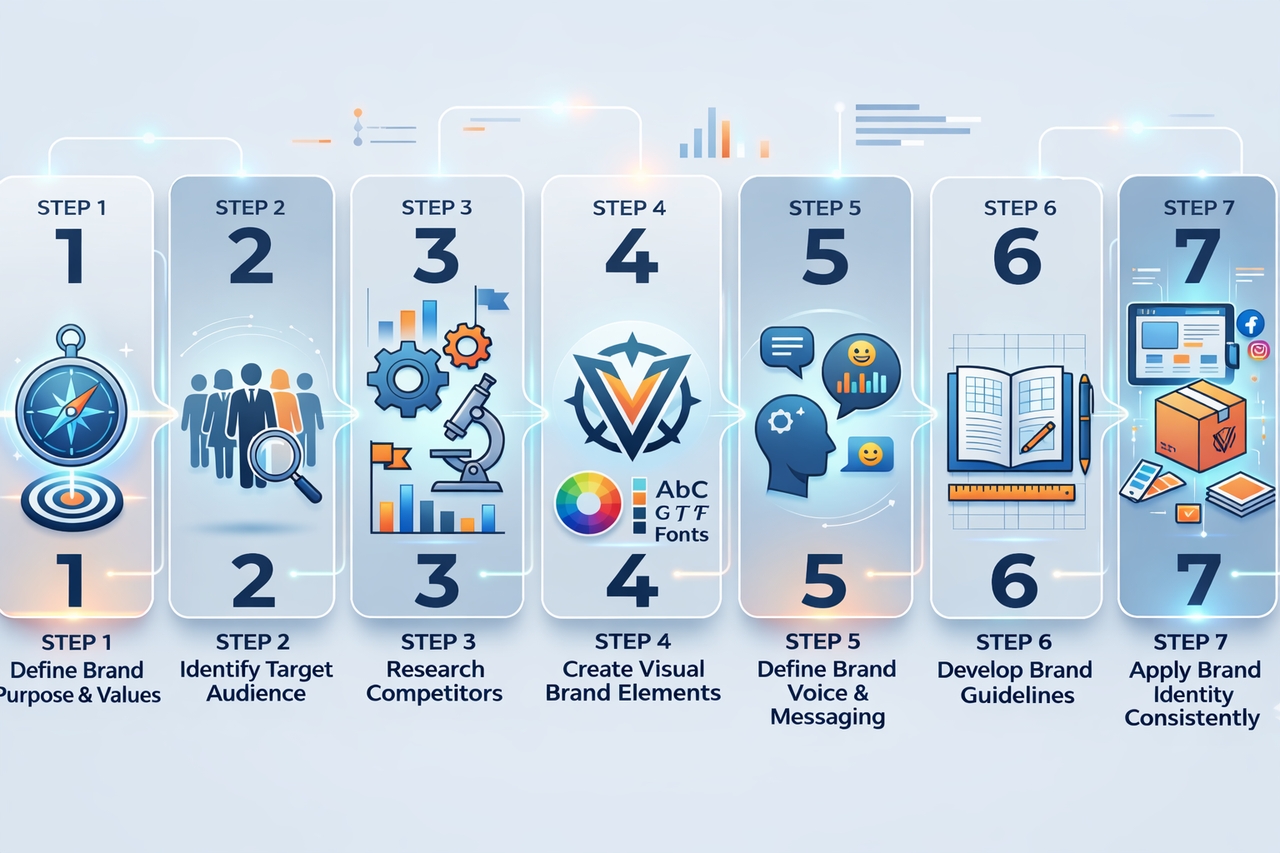
Step 1: Define your brand purpose and values
Start by clearly defining your brand’s mission, vision, and core values. These elements explain why your business exists and what it stands for. A clear purpose helps guide branding decisions and ensures your brand identity reflects meaningful values that resonate with your audience.
Step 2: Identify your target audience
Understanding your target audience helps you create a brand identity that connects with the right people. Research their demographics, interests, needs, and preferences so your messaging, visuals, and tone align with what matters most to them.
Step 3: Research competitors
Analyzing competitors helps you understand industry trends and branding strategies used by other businesses. This research reveals opportunities to differentiate your brand identity and position your business uniquely in the market.
Step 4: Create visual brand elements
Develop the visual components of your brand identity, including the logo, color palette, typography, and imagery style. These elements should work together to reflect your brand personality and create a consistent visual identity across all platforms.
Step 5: Define your brand voice & messaging
Establish a clear brand voice that reflects your company’s personality and values. Decide whether your tone should be professional, friendly, bold, or conversational, and ensure your messaging stays consistent across marketing channels.
Step 6: Develop brand guidelines
Brand guidelines document how your brand identity should be used. They typically include rules for logo placement, color codes, typography, imagery, and messaging style to maintain visual and communication consistency.
Step 7: Apply your brand identity consistently
Implement your brand identity across every customer touchpoint, including your website, social media, marketing materials, and packaging. Consistency strengthens recognition, builds trust, and helps your brand become more memorable over time.
To maintain this across high-volume content, Framia Pro's Branding Agent acts as a digital guardian, automatically applying your specific logo, colors, and character styles to every image you generate, ensuring effortless brand harmony at scale.
Tips and best practices for brand identity design
Developing a powerful brand identity requires thoughtful strategy and execution. Consider these best practices:
- Keep it simple. Complexity dilutes recognition. A simple, well-designed logo is more versatile and more memorable than a complex one. The same principle applies to your color palette: too many colors can confuse and weaken the brand's message.
- Design with emotion in mind: Choose visuals, colors, and imagery that evoke the right feelings (trust, excitement, calmness) aligned with your audience. Emotional connections turn casual customers into loyal advocates who identify with your brand.
- Prioritize consistency: Consistency builds trust. Whether someone sees your ad, visits your website, or contacts customer support, the experience should feel cohesive. Consistent branding can increase revenue by 10 to 20 percent — and a brand style guide is the tool that makes this achievable at scale.
- Ensure versatility: Your brand identity needs to work across a wide range of contexts and sizes — from mobile screens to billboards, from packaging to digital ads. Test your logo and visual elements in multiple formats before finalizing them.
- Build with purpose: Every design choice — color, font, imagery, layout — should reflect your brand's values and serve your audience's needs. Avoid visual choices that look appealing but don't align with who your brand is.
- Evolve thoughtfully: Markets change, trends shift, and customer needs evolve. A resilient brand identity must be able to adapt while staying rooted in its core values. Sudden or inconsistent changes can confuse customers or alienate loyal fans — but strategic evolution can strengthen your market position. Stay attuned to trends, monitor brand performance, and listen continuously to your customers.
Brand identity examples to inspire you
Looking at successful brands can help you understand how abstract values translate into concrete visual elements. Here are some of the most effective examples of brand identity in action:
Glossier
Glossier built its entire identity on transparency, simplicity, and community. Their soft pink and white color palette, minimalist typography, and clean packaging communicate effortless sophistication. Crucially, the same visual language appears on their website, social media, and product line — creating a seamless, recognizable experience across every touchpoint.

Nike
Nike's brand identity centers on motivation and performance. The iconic swoosh logo, bold typography, and the powerful "Just Do It" tagline create an inspiring brand image that resonates with athletes and everyday consumers alike. Nike consistently reinforces themes of determination, empowerment, and achievement in its branding and marketing.
Coca-Cola
One of the world's most recognizable brands owes its power to unwavering consistency. Coca-Cola's classic red and white palette, hand-drawn serif logo, and emotion-led campaigns have remained coherent for decades. Their identity is built on happiness, togetherness, and shared moments — a message woven into every campaign and every visual choice they make.

Airbnb
Airbnb rebranded in 2017 around a deeper truth: their business wasn't just about accommodation — it was about belonging. They redesigned every page of their user experience, created the iconic Belo symbol, and unified all brand touchpoints around that shared sense of belonging. The key lesson: listen to your users, then build an identity that reflects what they actually experience.
Spotify
Spotify's identity is intentionally restrained — a minimal green, black, and white palette — so the music itself can take center stage. Their logo, which features three curved lines inside a circle, subtly evokes the movement of sound. The brand successfully maintains this visual consistency across both mobile and desktop platforms, making it instantly recognizable worldwide.

Patagonia
Patagonia's identity is built around a single, uncompromising mission: saving the planet. Their recognizable mountain logo, earthy visual palette, and commitment to slow fashion are perfectly aligned. Even their business decisions — like donating 100% of Black Friday sales to environmental nonprofits — reinforce their identity. Every element is consistent, purposeful, and authentic.

LEGO
Founded on imagination, creativity, and learning, LEGO has built an identity that transcends generations. Their brand name, their mission, and their product all tell the same story. Cross-generational appeal is built into everything they do — from product design to marketing — making LEGO a powerful example of purpose-driven brand identity executed with extraordinary consistency.

Building your brand identity with AI
Once your brand strategy is defined, the execution phase — creating visuals, content, and creative assets that consistently reflect your identity — is where many solo creators and small teams hit a wall. Briefing designers, managing revisions, and producing brand-consistent content across multiple formats takes time and resources that aren't always available.
This is where AI-powered creative platforms are changing the workflow. Tools like Framia Pro function as an intelligent creative agent, connecting a range of leading AI models on a single canvas. For brand work, specifically, its Branding, Ad, and Social skills allow you to generate high-fidelity visuals and content that stay consistent with a defined creative direction — without needing a full production team behind them.
For solo creators and small businesses building out a brand identity, the practical value is straightforward: you can move from concept to polished, on-brand creative assets faster, and iterate without the overhead of traditional design workflows.
Final Thoughts
Building a brand identity is a foundational investment that transforms a simple business into a recognizable and trusted entity. It is the cohesive thread that connects your mission, visuals, and voice, ensuring that every customer interaction feels intentional and authentic. By following a strategic approach—from defining your core values to maintaining visual consistency—you create a "soul" for your brand that resonates with your audience.
As you move from strategy to execution, remember that consistency is your greatest asset. The goal remains the same across every platform: to create a lasting impression that cuts through the noise. Start with a solid foundation, stay true to your brand's personality, and your identity will become the anchor for your long-term success.
FAQs
- What is the difference between brand identity and branding?
Branding is the active process of shaping how people perceive your business. Brand identity is the specific set of elements you design and control to communicate that perception — it's the tangible output of your branding efforts.
- How long does it take to develop a brand identity?
Building a brand identity typically takes a few weeks to several months, depending on the project’s complexity. Small businesses may complete the process faster, while larger brands require more time for research, strategy, design development, feedback, and implementing branding across all platforms.
- How do I measure the success of my brand identity?
Measure success through brand awareness, customer recall, website traffic, social engagement, loyalty metrics, and sales growth. Surveys and feedback also help assess recognition and emotional connection.
- What is a brand style guide?
A brand style guide is a comprehensive document that outlines the specific rules for using your visual and verbal assets. It covers logo placement, color codes, font hierarchies, and tone guardrails, ensuring anyone creating content stays strictly "on brand."
- How often should a brand identity be updated?
Brand identities should evolve as businesses grow or market trends change. While core elements often remain consistent, companies may refresh their visuals or messaging every few years to stay relevant.